Showing posts with label Natural gas. Show all posts

Tuesday, August 28, 2012

The Synergy between Natural Gas and Electric Cars!

Natural gas is too "unstable" to use on our roads and highways where millions of cars and trucks are subject to the millions of traffic accidents. From a safety perspective alone, natural gas vehicles should not and cannot be allowed on our roads. There are simply too many uncontrollable variables.

Natural gas can however, power the transportation of the future as feed stock for electrical power generation. Because natural gas is so abundant, it only makes commons sense that electric power plants will use more and more natural gas as their feed stock over time. As this abundant source of power generation comes on stream, look to invest in the companies that stand to benefit from this game changer.

Duke Energy (DUK), Progress Energy (PREX.PK) and others are all good bets as is laid out by theStreet.com (See their top ten list for 2012) Electric power storage is also a great place to take a long term view. There companies in that space looking for fuel cell solutions (large fuel cell stacks that can burn nat gas) Ballard Power (BLDP), Plug Power (PLUG), and Hydrogenics (HYGS) are all pursuing such a solution. However, it is the feed stock of the future electric car that interests me most, and that is Lithium.

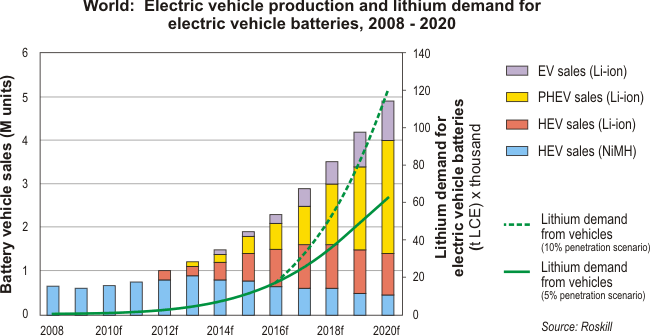
As Lithium becomes more and more the "go to" source for new battery technologies, from your iphone and laptop, to golf carts, electric motor cycles, cars and large storage facilities, look to the miners who produce, or will produce, lithium carbonate from two different sources, hard rock (pegmatite) and lithium brines or clays. Let me explain.

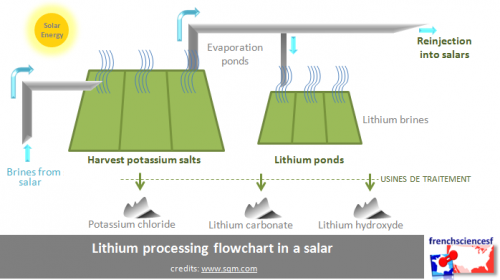
The largest supplier of Lithium today is Sociedad Qumica y Minera de Chile S.A. (SQM) which produces Lithium as a byproduct of its massive Potash operations. As with other large miners, SQM sells it's lithium on a spot market (there is currently no futures market for lithium, however this could change in the coming years)

Now electric battery manufacturers and car makers require a steady stream of lithium carbonate for their manufacturing processes so as not to interrupt production. To date, suppliers such as SQM, FMC et al have refused to sign contracts to supply a continuous, uninterrupted supply of product to manufacturers. This is mainly because, even though brine production is the most economical way to produce lithium, it is more sporadic than spodomen production, due to the natural drying out process supplied by the sun, that makes it more economical in the first place.
Australian producer Talison Lithium (TLTHF.PK) (TLH-T) is the largest, pure lithium producer on the planet, and its spodomen production from its Greenbushes operation in Western Australia, is the richest hard rock deposit on the planet. Talison supplies over 300 customers with product and is the largest supplier to the growing Chinese market, due to its ability for continuous production and its proximity China. Talison also boasts a very large brine deposit in South America due to its purchase of Salares Lithium in 2010. In 2012 Talison reports a 25% increase in the price of lithium this year alone (2012).
(click to enlarge)
FMC Corporation (FMC) is another large producer based in South America, with brine production as a byproduct of other operations such as potash. As with SQM, lithium is only a part of its total operations and as potash becomes more important as agriculture attempts to feed a hungry world, its share price looks attractive as well.

As the lithium market grows, you should not ignore the juniors who have popped up over the past five years to take advantage of large deposits which may at some point, be quite productive or gain the notice of larger producers as consolidation takes place, as it so often does in young, growing markets.

In this space I like both Western Lithium (WLCDF.PK)(WLC-T) for its large, Kings Valley clay deposit in mining friendly Nevada and Rodinia Lithium (RDNAF.PK) (RM-T) as it owns three of the top 20 lithium brine deposits on the planet. If there is a future consolidation in the industry, these two should be tops on the majors lists.

In the "Battery" tech area I like A123 Systems (AONE). At only .50c per share this high tech battery maker has been hammered this year, well below where I think it should trade. At .50c per share, it is one of the best speculative penny stocks out there.

The above chart shows some of the other companies working in this field and as you can see from the chart, Lithium is a common denominator in battery development.

UPDATE: Aug 24th 2012
Rockwood Holdings (ROC) made an offer for Talison Lithium of $724 Million driving Talison shares up by 53% since yesterdayès close. We have cashed out our position in Talison with 110% gain.  Looking for an entry point into ROC now as it strengthens itès already substantial position as a world leader in the production of Lithium!

Editor
Enhanced by Zemanta

Friday, August 20, 2010

The pain in Grain is mainly on the Brain!

Wheat.Image via WikipediaThis week, CNBC commentators were asking if "Wheat is the new oil"! Of course they were referring to the troubles in the Russian Wheat pool and a possible 20% reduction in Canada's wheat crop this year and the impact of these two, otherwise unrelated events, on the price of grain, specifically Wheat. They were also wondering is "Potash the new oil". (the hostile bid on Potash Corp by BP Billiton)
My Deja Vu senses awakened when I heard the comments.  It took me back a year when the same CNBC pundits were asking, "Is Lithium the new oil" (electric car batteries) and two years ago when they asked "Is natural gas the new oil".  (new shale gas discoveries) It even took me back to the turn of the century (this century of course) when the same pundits were asking "Is hydrogen the new oil"! (hydrogen fuel cell vehicles)

Tuesday, August 10, 2010

Carbon Sciences Successfully Synthesizes Proprietary Raw Catalyst Needed for Making Gasoline Without Using Crude Oil

Se belowImage via Wikipedia

UPDATE Reuters ProVestor Plus Company Report 10 December 2010 Reveals CABN now has 14 patents.

Making Gasoline without Crude Oil!

Catalyst is Key to Demonstrating the Commercial Feasibility of the Company’s Breakthrough CO2 Based Gas-to-Liquids (GTL) Technology

Santa Barbara, CA - August 9, 2010 - Carbon Sciences, Inc. (CABN), the developer of a breakthrough technology to transform greenhouse gases into gasoline and other portable fuels, today announced the successful synthesis of a proprietary raw catalyst, an essential step toward demonstrating commercial feasibility of the technology.

“In June of this year, we filed a landmark patent application for our breakthrough CO2 based Gas-to-Liquids technology,” said CEO Byron Elton. “The production of this catalyst is the actual laboratory scale implementation of the catalyst formulation and its synthesis process disclosed in the patent. It is a major step forward for us,” he added.

The major challenge in CO2 based GTL reactions is the activation of stable carbon dioxide and methane molecules. This company’s novel and proprietary catalyst provides a simpler and cleaner route by activating these stable molecules and converting them to gasoline. Gas-to-liquid reactions are regulated through temperature, concentration, pressure and contact time. This catalyst accelerates these reactions, enabling them to be carried out under the most favorable thermodynamic regime and at much lower temperature and pressure. “Our catalyst, in conjunction with an optimized reactor and total plant design, will be the key factors in reducing both the capital and operating costs of our next generation GTL technology”, Elton said.

“A fully active and stable catalyst will be the key to our success,” said Dr. Naveed Aslam, inventor of the technology. “Synthesizing our proprietary raw catalyst is a vital step in a multi-stage catalyst synthesis and activation process,” he added.

Gas-to-liquids (GTL) is a complimentary refinery processes that converts natural gas and other gaseous hydrocarbons into longer chain hydrocarbons such as gasoline. Carbon Sciences estimates that they can produce 138 billion gallons of gasoline a year (the annual amount used in the U.S.) with 23 trillion cubic feet of natural gas and 586 million tons of CO2 without using crude oil or competing with current natural gas consumption.

About Carbon Sciences, Inc.

Carbon Sciences Inc. is developing a breakthrough CO2 based gas-to-liquids technology to transform greenhouse gases into liquid portable fuels, such as gasoline, diesel and jet fuel. Innovating at the forefront of chemical engineering, we are developing highly scalable clean-tech processes to produce liquid fuels from naturally occurring or human-made greenhouse gas emissions. From sources such as natural gas fields, refinery flare gas, landfill gas, municipal waste, algae and other biomass, there is an abundant supply of inexpensive feedstock available to produce large and sustainable quantities of liquid fuel to replace petroleum for global consumption, thereby eliminating our dependence on petroleum. 


Website
http://www.carbonsciences.com.

  To receive news about this industry and Carbon Sciences on a regular basis, you can

subscribe to their newsletter


Previous Articles about Carbon Sciences:
Oil Company exec jumps into Green Tech
Carbon Sciences files landmark patent application 
Carbon Sciences files second patent application 
Belief in energy independence drives Carbon Sciences 
Getting in on the ground floor of world changing green technology

CNN interviews Carbon Sciences CEO

Enhanced by Zemanta

Wednesday, July 14, 2010

Carbon Sciences Announces the Addition of Dr. Howard Fong as Scientific Advisor

Shell Oil CompanyImage via Wikipedia
Editors note: Carbon Sciences Inc (CABN-OTC) is developing a new breed of "Nano-Reactor" that should revolutionize the nascent carbon capture and conversion industry allowing for the commercialization of converting carbon emissions (from coal and oil fired industries and from natural gas ie: from landfills) directly into usable gasoline, "without" using high energy heat.


The company has already demonstrated it's technology works, and expects to have a working reactor by the end of Q3 2010. The sector is now referred to as Gas to Liquids or "GTL" and it is growing. The company's president, Byron Elton, was recently interviewed by Ally Velchie on CNN Business and that interview can be found at: http://www.carbonsciences.com/01/youtubeplayer.html

News Release:
Retired Technical Lead at Shell Oil Company to Provide Guidance to Company’s Management Team

Santa Barbara, CA - July 14, 2010 - Carbon Sciences, Inc. (CABN), the developer of a breakthrough technology to transform greenhouse gases into gasoline and other portable fuels, today announced that Dr. Howard Fong has joined the company as a Scientific Advisor.

Dr. Fong received his Bachelor of Science in Chemical Engineering from San Jose State University in 1971, and Doctor of Philosophy in Chemical Engineering from the University of California, Berkeley in 1975. He joined Shell Development Company (Shell Oil Company) at the Westhollow Technology Center in Houston, Texas in 1975, and rose to the rank of Managing Engineer, the highest technical rank of the Royal Dutch Shell Group. He retired from the company in April of 2010.

Dr. Fong has broad and deep knowledge of the petrochemical industry and specializes in new technology assessment, development and commercialization, functioning at the interface between technology and business. He is the holder of over 30 patents and several of the major developments he helped initiate at Shell have been commercialized. He has extensive experience working with start-up companies, providing critical techno-economic evaluations and charting the path for successful commercialization.

“Dr. Fong’s extensive experience and track record in the petrochemical industry at the highest levels will be invaluable to Carbon Sciences as we continue to develop our revolutionary CO2 based Gas-to-Liquids technology,” stated Byron Elton, CEO, Carbon Sciences. “With Dr. Fong advising Dr. Aslam, our Chief Technology Officer and inventor of the process, we have the world-class, best of breed talent we need to move forward,” Elton added.

About Carbon Sciences, Inc.

Carbon Sciences Inc. is developing a breakthrough CO2 based gas-to-liquids technology to transform greenhouse gases into liquid portable fuels, such as gasoline, diesel and jet fuel. Innovating at the forefront of chemical engineering, we are developing highly scalable clean-tech processes to produce liquid fuels from naturally occurring or human-made greenhouse gas emissions. From sources such as natural gas fields, refinery flare gas, landfill gas, municipal waste, algae and other biomass, there is an abundant supply of inexpensive feedstock available to produce large and sustainable quantities of liquid fuel to replace petroleum for global consumption, thereby eliminating our dependence on petroleum. 


To learn more about the Company, you can visit their website at http://www.carbonsciences.com.

Or, Subscribe to the Carbon Sciences Newsletter  subscribe to newsletter


Editors Note: 

Two recent patent applications by Carbon Sciences in their "CO2 to gasoline technology" may have contributed to drawing Doctor Fong into the CABN fold as they prepare their ground breaking, GTL process for commercial application sometime in the next year. We will be monitoring this story with interest.

Disclosure: own CABN

Enhanced by Zemanta

Monday, July 5, 2010

Carbon Sciences Files second Patent Application for Novel High Yield Membrane Reactor

Editors note: Carbon Sciences Inc (CABN-OTC) is developing a new breed of "Nano-Reactor" that should revolutionize the nascent carbon capture and conversion industry allowing for the commercialization of converting carbon emissions (from coal and oil fired industries and from natural gas ie: from landfills) directly into usable gasoline, "without" using high energy heat.


The company has already demonstrated it's technology works, and expects to have a working reactor by the end of Q3 2010. The sector is now referred to as Gas to Liquids or "GTL" and it is growing. The company's president, Byron Elton, was recently interviewed by Ally Velchie on CNN Business and that interview can be found at: http://www.carbonsciences.com/01/youtubeplayer.html

News Release:

A Breakthrough Reactor Configuration Improves Conversion Yield and Economics of Company’s CO2 based Gas to Liquids Technology

Santa Barbara, CA - July 1, 2010 - Carbon Sciences, Inc. (CABN), the developer of a breakthrough technology to transform greenhouse gases into gasoline and other portable fuels, today announced the filing of a patent application for a breakthrough reactor configuration. This is the second of a series of patent applications for the company’s highly scalable, clean-tech CO2 based Gas-to-Liquids (GTL) fuel technology for transforming a combination of natural gas and carbon dioxide (CO2) directly into gasoline.

“This novel reactor configuration speaks directly to the commercial feasibility of our technology and its environmentally friendly approach,” stated Byron Elton, CEO, Carbon Sciences. “Current GTL processes rely on energy intensive downstream processing to separate fuel from raw product mixture, which produce and emit significant amounts of CO2. In contrast, our process uses CO2 as a feedstock which mitigates enormous quantities of greenhouse gas emissions into the atmosphere,” added Elton.

Gas-to-liquids is a refinery process that converts natural gas and other gaseous hydrocarbons into longer chain hydrocarbons such as gasoline. Carbon Sciences estimates that they can produce 138 billion gallons of gasoline a year (the annual amount used in the U.S.) with 23 trillion cubic feet of natural gas and 586 million tons of CO2 without competing with current natural gas consumption.

“This novel catalytic membrane reactor combines reaction and separation in a single unit operation, increasing per pass product yields beyond equilibrium limitations and reducing plant investment costs through process intensification,” added Dr. Naveed Aslam, Chief Technology Officer for Carbon Sciences.

To learn more about Carbon Sciences' breakthrough technology to create gasoline and other fuels without petroleum, please visit www.carbonsciences.com

About Carbon Sciences, Inc.

Carbon Sciences, Inc. is developing a breakthrough CO2 based gas-to-liquids technology to transform greenhouse gases into liquid portable fuels, such as gasoline, diesel and jet fuel. Innovating at the forefront of chemical engineering, we are developing highly scalable clean-tech processes to produce liquid fuels from naturally occurring or human-made greenhouse gas emissions. From sources such as natural gas fields, refinery flare gas, landfill gas, municipal waste, algae and other biomass, there is an abundant supply of inexpensive feedstock available to produce large and sustainable quantities of liquid fuel to replace petroleum for global consumption, thereby eliminating our dependence on petroleum. To learn more about the Company, please visit our website at http://www.carbonsciences.com.

Subscribe to the Carbon Sciences Newsletter

  Subscribe Here


Previous articles about Carbon Sciences technology.
Enhanced by Zemanta

Wednesday, June 23, 2010

Carbon Sciences Believes Gas-to-Liquids Fuel Technology Key to Energy Independence

Se belowImage via Wikipedia
Editors note: Carbon Sciences Inc (CABN-OTC) is developing a new breed of "Nano-Reactor" that should revolutionize the nascent carbon capture and conversion industry allowing for the commercialization of converting carbon emissions (from coal and oil fired industries and from natural gas ie: from landfills) directly into usable gasoline, "without" using high energy heat.


The company has already demonstrated it's technology works, and expects to have a working reactor by the end of Q3 2010. The sector is now referred to as Gas to Liquids or "GTL" and it is growing. The company's president, Byron Elton, was recently interviewed by Ally Velchie on CNN Business and that interview can be found at: http://www.carbonsciences.com/01/youtubeplayer.html


NEWS RELEASE
GTL Technology is Best Candidate to End USA’s Addiction to Petroleum and Provide 100% of Needed Transportation Fuel

Santa Barbara, CA - June 22, 2010 - Carbon Sciences, Inc. (CABN), the developer of a breakthrough technology to transform greenhouse gases into gasoline and other portable fuels, today asserts its belief that Gas-To-Liquids (GTL) fuel technology is key to the United States goal of energy independence following the release of the Annual Energy Outlook 2010 projections from the U.S. Energy Information Administration (EIA).

“The crisis that our country faces is how to obtain the quantities of liquid fuel required to maintain our standard of living and drive future growth without using petroleum, foreign or domestic,” stated Byron Elton, CEO, Carbon Sciences. “The EIA predicts that world energy consumption will skyrocket 49 percent over the next 25 years. Of all the alternative fuel technologies under development, GTL technology is the only one with the ability to significantly replace petroleum and provide the nearly 140 billion gallons of gasoline we use each year,” added Elton.

Gas-to-liquids is a refinery process that converts natural gas and other gaseous hydrocarbons into longer chain hydrocarbons such as gasoline. Carbon Sciences announced earlier this year a patent filing for a breakthrough CO2 based GTL technology to transform greenhouse gases into liquid, portable fuels.

“The use of natural gas and carbon dioxide as the feedstock for our transportation fuels offers significant advantages over petroleum,” stated Elton. “The US has over 2,000 trillion cubic feet of known, but unexplored, natural gas reserves. Our CO2 based GTL technology, when fully commercialized, can be used to produce enough gasoline for the US for 47 years without competing with current natural gas consumption of 25 trillion cubic feet, and without using a teaspoon of oil,” he added.

Many companies, including all the major oil companies have been increasing their investments in the GTL sector. Royal Dutch Shell has invested $19 billion dollars in Pearl GTL in Qatar, the world’s largest GTL plant.

“The ongoing disaster in the Gulf is a wakeup call to the United States, and the world, that we must develop alternative, domestic sources of cleaner transportation fuels that will fit into the existing infrastructure, supply chain and vehicles,” added Dr. Naveed Aslam, Chief Technology Officer for Carbon Sciences.

To imagine a world without petroleum and learn more about Carbon Sciences' breakthrough technology, please visit www.carbonsciences.com

About Carbon Sciences, Inc.

Carbon Sciences, Inc. is developing a breakthrough CO2 based gas-to-liquids technology to transform greenhouse gases into liquid portable fuels, such as gasoline, diesel and jet fuel. Innovating at the forefront of chemical engineering, we are developing highly scalable clean-tech processes to produce liquid fuels from naturally occurring or human-made greenhouse gas emissions. From sources such as natural gas fields, refinery flare gas, landfill gas, municipal waste, algae and other biomass, there is an abundant supply of inexpensive feedstock available to produce large and sustainable quantities of liquid fuel to replace petroleum for global consumption, thereby eliminating our dependence on petroleum. To learn more about the Company, please visit our website at http://www.carbonsciences.com.

Subscribe to the Carbon Sciences Newsletter

To receive regular news about this industry and Carbon Sciences on a regular basis, you can subscribe here!

Enhanced by Zemanta

Monday, June 7, 2010

News Release - Carbon Sciences Files Landmark Patent Application for Breakthrough CO2-Based Gas-to-Liquids Fuel Technology !

(News release from CABN)
Company’s Technology Poised to help Eliminate World’s Petroleum Dependency by Producing Gasoline from a Combination of Natural Gas and Carbon Dioxide

Santa Barbara, CA - June 7, 2010 - Carbon Sciences, Inc. (CABN), the developer of a breakthrough technology to transform greenhouse gases into gasoline and other portable fuels, today announced the filing of the first of a series of patent applications for its highly scalable clean-tech CO2 based Gas to Liquids (GTL) fuel technology for transforming a combination of natural gas and carbon dioxide (CO2) directly into gasoline.

This first patent application discloses the design and manufacturing of a novel chemical catalyst that converts methane gas and carbon dioxide gas (CO2) directly into gasoline. These greenhouse gases can be sourced from natural gas fields or human made coal-fired power plants, landfill gas, municipal waste, and even algae.

“This heralds a new era for Carbon Sciences and means that our plan for delivering a market-ready technology could be delivered as soon as next year,” said Byron Elton, CEO of Carbon Sciences. “The ongoing tragic events involving BP’s unchecked flow of oil into the Gulf of Mexico further underscores the urgent need to reduce and eliminate our addiction to petroleum, foreign and domestic. Carbon Sciences’ breakthrough technology takes us closer to a world without petroleum by essentially transforming pollution into energy.”

Today’s announcement is related to the most important module of the company’s previously announced end-to-end CO2 to fuel system that recycles raw CO2 flue emissions from carbon emitters like coal-fired power plants directly into gasoline and other portable fuels. The new module under development is designed to be a standalone system to substantially shorten the timeline to commercialization, and reduce the overall systems and operating costs and produce a fuel that can be used in the existing infrastructure, supply chain and vehicles.

Dr. Naveed Aslam, the company’s Chief Technology Officer, commented, “We are very excited about the standalone commercialization of our CO2-GTL Gasoline module. This system will provide a sizable part of the energy industry with an immediate clean-tech solution for the energy and climate challenges we face. Unlike other technologies, such as those for algae biofuels, that may require decades for commercial deployment, our plan for delivering a market-ready technology may be available as soon as early next year. Within a short period of time, we believe that the world can stop drilling for oil and start converting natural gas and greenhouse gases to gasoline.”

Mr. Elton added, “The clear and short path to commercialization with this new CO2 based gas to liquids technology makes it our singular focus for the next twelve to eighteen months. The company’s website has been updated to reflect this strategy and focus.”

To imagine a world without petroleum and learn more about Carbon Sciences’ breakthrough technology, please visit www.carbonsciences.com.

About Carbon Sciences, Inc.

Carbon Sciences, Inc. is developing a breakthrough CO2 based gas-to-liquids technology to transform greenhouse gases into liquid portable fuels, such as gasoline, diesel and jet fuel. Innovating at the forefront of chemical engineering, we are developing highly scalable clean-tech processes to produce liquid fuels from naturally occurring or human-made greenhouse gas emissions. From sources such as natural gas fields, refinery flare gas, landfill gas, municipal waste, algae and other biomass, there is an abundant supply of inexpensive feedstock available to produce large and sustainable quantities of liquid fuel to replace petroleum for global consumption, thereby eliminating our dependence on petroleum. To learn more about the Company, please visit our website at carbonsciences.com.


Disclosure: own CABN  - a speculative penny stock. 

Editors note: Carbon Sciences Inc (CABN-OTC) is developing a new breed of "Nano-Reactor" that should revolutionize the nascent carbon capture and conversion industry allowing for the commercialization of converting carbon emissions (from coal and oil fired industries and from natural gas ie: from landfills) directly into usable gasoline, "without" using high energy heat.


The company has already demonstrated it's technology works, and expects to have a working reactor by the end of Q3 2010. The sector is now referred to as Gas to Liquids or "GTL" and it is growing. The company's president, Byron Elton, was recently interviewed by Ally Velchie on CNN Business and that interview can be found at: http://www.carbonsciences.com/01/youtubeplayer.html
Enhanced by Zemanta

Wednesday, May 19, 2010

Greece! It has less people than the city of Los Angeles! Now ask yourself, is U.S. cash a trap waiting to be sprung


Image by Steve Rhodes via Flickr
The Euro is suffering because of the initial reluctance of the EU countries to take action regarding the Greek debt crisis. A devaluation of the Euro is overdue, and necessary. It will actually strengthen the Euro's trade deficits over time, and bring prosperity (eventually) But forget Portugal, Ireland, and Spain. In the greater scheme of the international markets, they are small fry.

However, it is the eventual devaluation of the U.S. dollar that should have Americans much more concerned. Beware of what is happening in California, Florida, Illinois, Ohio, Michigan, North CarolinaNew Jersey  and even Texas. These states have all spent over 1 billion on their unemployed alone, bankrupting their unemployment budgets. They also have between 13.7 and 17% unemployment, huge debts and deficits, and in some cases, housing prices have been cut in half.

Like the "Pigs" of Europe, these states also cannot print their own money, thereby inflating their way out of the current malaise. As the PIGS of Europe are having a huge, negative impact on the Euro, these states, (the HUGE federal debt notwithstanding) will have the same affect the U.S. dollar. It is a certainty. The only question is, how long can "king dollar" (as Larry Kudlow likes to call it) remain king. It currently is only king because there are no princes in waiting (as regards other world currencies). So, is "Prince Gold" quietly mounting a coup against the King. How about "King Commodity" who is somewhat weakened right now, but will be gathering strength as 2010 progresses.

Many developing countries, including China, India, Indonesia, Russia, South Korea, Brazil etc. are already looking to gold as a substitute for the prominence of the U.S. currency. Many individual investors and fund managers in these countries and throughout the west, have also moved into gold and commodities as a hedge against the demise of the usd. Some have recently added the Canadian and Aussie dollar to their international currency accounts as these two countries are considered "commodity rich"!

Whether they are right or wrong, sentiment is what moves the market. Anyone who thinks that gold, oil, uranium, titanium, natural gas, copper, diamonds, platinum, palladium, REE's or Lithium are not good places to put your money in this environment, just isn't paying attention. We are taking advantage of the current market disarray and buying these commodities


The U.S. dollar is a bubble waiting to explode into hyper inflation. Cash is a trap waiting to be sprung, and the current downturn is just that, a downturn that was expected and somewhat welcome by smart investors. Being in cash at the beginning of May was smart. Being in cash in June won't be.


Reblog this post [with Zemanta]

Wednesday, May 5, 2010

Cenovus and Suncor stand to profit from huge stake in worlds largest oil deposit.

The recoverable resource base is now 1 Trillion barrels of oil, with two Trillion more in reserves. Yes, that is Trillion!!


The Athabasca oil sands (not the company of the same name) in Canada is far and away, the largest deposit of oil on the planet, dwarfing the 250 Billion barrels of the entire Middle East. This resource alone can power the entire continent of North America, for the next 100 years. So why do Americans believe that the Middle East is their biggest supplier of oil (it is not, Canada is) and why is there a general misconception that the Middle East is where all of the oil is (not!). Even the vaunted New York times still believes Canada is second to the Middle East with 175 billion barrels of oil. Even most Canadians don't realize the enormous resource they are sitting on. It spans across northern Canada in a mass larger than England (The country!)


I guess the answer can be found in the constant barrage of news, both good and bad, that emanates from the middle east on a weekly basis. Conservative, soft spoken, boring old Canada can't compete with all that noise, but it certainly can compete in the energy industry. The largest supply of oil on the planet and that does not even include other reserves such as the Bakkan or what may lie beneath the arctic circle!

With oil companies from every country salivating over what may lay beneath the Arctic circle, Canada, you must remember, owns 25% of the Arctic! Canada also lays claim to over  20% of the worlds water supply (with only .03% of the worlds population),the second largest deposits of natural gas and coal on the planet, More Diamonds, potash, gold, copper, wheat and nickel than any other country as well as great stores of Lithium, Rare Earth elements (REE's) lumber, seafood, gypsum, wheat, cattle, and more!

Canada has paid down deficits for 9 of the past 10 years, has the most stable banking system in the world and a friendly, conservative government that is business friendly. These are only some of the reasons why the Canadian dollar (the Loonie) has had a stellar year, and will for many years to come.
  
  However, I digress, because this article is about the tremendous resource (and investment opportunity) that is the Athabasca oil sands. Stretching through the north of two provinces, Alberta and Saskatchewan, the oil sands are massive. Since the invention of the "steam assisted gravity drainage system (SAGD) the oil sands have been a booming place for investors. Given the massive resource base, that boom has only really scratched the surface (excuse the pun).

The bitumen could cover the entire country of England, and is as deep as 140 feet. Why do companies persist in destroying the gulf of Mexico, and the beaches and marshes of the southern states, when they can literally set up shop on the sands, shovel the bitumen into what is essentially a giant washing machine, and produce enough oil to power our cars, homes, power plants or whatever, for the next 100 years and beyond. Not only that, but you can ship it through pipelines to the U.S. market.

Just promise the friendly Canadian government that you will clean up after you leave, and you have a viable, 100 year energy operation that will make money for you every year. The biggest consumer of the product is right next door, with an insatiable appetite and it now has the political problem of explaining to it's citizens why 1/4 of the American marsh land is in jeopardy of being destroyed for the next 10 years.

Do you even wonder why the Chinese are now buying into this massive resource? (And backing a pipeline to the Pacific coast so they can ship raw bitumen back to China for processing)

It's time for America to wake up, and smell the oil (and the money)!

(Disclosure - No holdings)

Our top pick in this environment is Cenovus oil (CVE). In 2009 Encana split it's oil and gas assets with Encana (ECA) keeping the natural gas component and a new company, Cenovus, keeping the oil assets (with some nat gas). In Q1 2010, Cenovus boosted it's production by 66%  Cenovus has the best technology for processing bitumen in the oil sands and it is getting even better.There is no exposure in the gulf offshore drilling.
Expert high on Suncor - Cenovus - Canadian Oil
Enhanced by Zemanta

Wednesday, March 17, 2010

Oil at $25 per Barrel? A Bull market in Coal? Are these things possible?


Oil BarrelImage by yuan2003 via Flickr

What if oil went to $25 per barrel, and stayed at that price for decades?(see- New Technology)

What if the price of natural gas dropped 50%?(see-increased supply)

What would these two events do to the economic outlook of North America, and the world, for the next 50 years?
Are thes
e events even possible?
Are they likely?
Are they "pie in the sky" theories?


In a recent article ( see World changing technology ) we discussed a new, technological breakthrough, by a small California Company, Carbon Sciences, which may allow large emitters of CO2 to not only capture it, but turn the CO2 into gasoline.

Now researchers at the University of Texas at Arlington (UTA) have claimed that they can produce a synthetic crude oil, directly from coal (of which the United States and Canada hold almost 50% of the World's supply) for just over $28 per barrel and they intend to bring that price down.

As if that announcement wasn't eye opening enough, they claim that they can do this with no measurable pollution result. Researchers also state that the process will work just as well with oil sands and shale deposits. As if that isn't enough to get investors attention, they advise that, although it can be refined in traditional refineries, this synthetic oil is best refined in micro refineries which can be built for 25% of the cost of today's refineries. The United States Government has already approved construction of one such micro refinery to test the UTA Lab's breakthrough technology.

The coal being used is one of the cheapest, Lignite, which is found in abundance in Texas and around North America. Texas lignite coal sells for $18 per tonne. The coal conversion technology uses one tonne of coal to produce 1.5 barrels of crude oil. One barrel of crude produces 42 U.S. gallons of gasoline. In other words, $18 worth of coal yields 63 gallons of gasoline: 0.28 cents per gallon! In other words, if this technology proves out, both the USA and Canada (as well as many other democracies around the world which have abundant supplies of coal, will own centuries worth of cheap energy, and become net exporters of that energy!

Without having first hand knowledge, I will wager here, that the oil industry has a big stake in this technology and who better to develop such innovation than the deep pocketed U.S. oil companies. It is in their financial interests to keep the good ole US of A hooked on it's product(s). As both China and India grow their middle class, energy production needs to use every resource.

As Natural Gas companies ramp up production from traditional finds as well as giant shale deposits which exist all over North America, the price of that resource continues to drop. North America has the largest deposits of Natural gas in the world today, and that resource alone could power North America for hundreds of years.!

So how do we, as investors, digest this new information and how can we make it work for our portfolio's?

In the short term, until new technologies are accepted and come on stream, the price of oil will creep up as this shaky recovery takes shape. However, as these technologies get proven and are adopted large scale, the price of oil could sink dramatically (still several years out). If oil can be produced from a cheap, abundant supply of coal, on shore in North America, without damaging the environment, then the whole dynamic changes. I'm not an economist, however here are some possibilities that come to mind:

1. Coal mining would intensify throughout North America, creating blue collar jobs in small communities currently devastated by the economic down turn, with the resultant economic spin offs to equipment suppliers and construction companies, to those mining companies.

2. A new boom in refinery construction would also create hard hat, engineering and tech jobs, as well as create the same sort of spin offs to suppliers.

2. Oil sands production will halt, because you cannot dig bitumen for processing at $25 per barrel. (Even though the UTA process works on bitumen as well as coal)

3. Investments in OPEC oil resources would be severely tested as demand from it's largest customer, the USA, begins to drop dramatically.

4. As more power plants can be built using cheap oil and Natural gas (as well as nuclear and wind energy), the demand for Electric Vehicles (EVs) will grow, along with the demand for Lithium which will be used to store energy.( A contrarian argument can be made here for the growth of Hybrid vehicles instead of electric, because of cheaper gasoline.

5. Shipping oil via tankers may drop significantly.

6. Railways will be winners as coal and natty gas are shipped throughout North America and more petroleum based products are again made on this continent and shipped trans continent. (Warren Buffet you old investor you!)

7. The usd will continue to slide, until these events begin to unfold, at which time it will strengthen once again.

8. Industry will return, at least in some form, to North American communities powered by cheap energy.

9. Huge, energy market speculators, like JP Morgan, will no longer be able to hold the American consumer hostage by holding tankers full of oil offshore and spiking the price so they can sell into the inflated market.

10. New Fuel Cell Stack, Power plants powered by plentiful natural gas will be built, reducing co2 emissions, and helping to "electrify" the transportation industry along with Wind Energy.

These are only some of the possible outcomes, and I am sure that more learned readers than I can come up with a myriad of possibilities. No matter how you slice it, if these technologies take hold, along with the Fuel Cell industry, the Lithium boom , Wind energy and Solar, and the advent of the Electric car, the economic outlook for this continent will brighten once again, as we lead the world in production and possibilities.

More: A Eureka moment at Texas University - The Globe and Mail

Related articles by Zemanta
Reblog this post [with Zemanta]

Monday, March 8, 2010

Hold on to your Loonies!


Last year we told you to "hold on to your Loonies" as the Canada buck was trading around .77 usd at the time. Needless to say, we told you so! This week both the National Post and RBC are telling you the same thing, forecasting that by the end of the second quarter, the Loonie will trade "above" the U.S. dollar.

There has even been a spike in put options of late which allow the buyers to sell Aussie dollars for the Canada buck (Loonie). As the world searches for more places to "stash their cash", Canada has been at the forefront. The soundest banking system on the planet (Four of the five major banks just reported profits above analysts expectations) coupled with many natural resources, makes Canada a good bet for foreign investors and with the latest Canadian budget, that outlook brightens further, as the Canadian Government has done away with restrictive bureaucracy that kept, especially, American V/C firms from investing in Canada. With those restrictions gone, more capital is looking to Canada for safety as well as innovation in energy, bio tech, mobile web technology and numerous other businesses.

Canada projects (and so do many economists around the world) that it will be first mature economy to emerge from deficit spending. As the largest supplier of oil to the United States, and with an abundance of Natural Gas, hydro power and recently wind power, Canada is well positioned in the energy sector, with the largest consumer of energy right next door.

Add to that the fact that Canada holds over 20% of the worlds fresh water supply while it's citizens make up only .03% of the worlds population, and the outlook becomes brighter still.
Oh yes, have I mentioned Canada is the #2 suppler of diamonds to the world, (the #1 supplier of "non-blood" diamonds) and is in the top 3 % of suppliers of Potash, gold, copper, nickel, uranium, platinum, etc. It's known reserves of natural gas is second only to the United States at present, but will probably take the number one spot as exploration ramps up for shale gas.

Even manufacturing is flying in Canada as Bombardier of Montreal takes on the Giants of Aerospace, Boeing and Lockheed Martin, at least in the regional jet space, while it's rail car division signs more new contracts in Europe and Asia for high speed rail in the $Billions. Ballard Power Systems, the granddaddy of fuel cell technology is signing contracts in Europe and especially India to supply those areas with clean tech portable power for their mobile web expansion. Ottawa based Wilan Technologies has signed 212 licenses for it's mobile web technology and on March 11th, it stands to reap even more rewards from it's patents as Apple and 18 other tech giants face a Markham hearing in a Texas court to determine how much they have infringed on Wilan's patents.

Magna International, Inc. is an Ontario, Canada based company, which produces a massive amount of auto parts for many players in the auto industry. It also has a new division, Magna E-Car Systems, that provides integration of components and systems, as well as the development and production of innovative complete-vehicle solutions, from engineering to turnkey systems, for all hybrid and electric vehicle programs around the world. Magna also manufactures other automotive systems, assemblies, modules, and products.

Encana is a major natural gas supplier, with huge investments in shale gas from Texas to New York, from Vancouver to Nova Scotia besides it's already extensive regular natural gas projects. Encana recently split into two entities, leaving most of it's oil business to a new company Cenovus a now lean oil player based in Calgary Alberta. As two separate entities since November 2009, these two companies figure to factor in to the North American energy market in a big way over the next decade.

TD Bank, Canada's second largest bank, is expanding into the U.S. market at a time when many U.S. banks are ripe for the taking, and it expects that it's U.S. arm may outpace it's Canadian system of 2,000 branches in the not too distant future. Currently, without that growth, it already stands at North America's 7th largest bank by capitalization.

In 9 out of the last 10 years, Canada has not only been in "the black" but has actually paid down debt in each of those years, while the rest of the G20 sank deeper. Even with this years deficit, caused by international events rather than domestic, Canada's "per capita" debt is less than half that of America.

The Loonie is outshining the usd for good reason. Natural Resources, Natural Gas, Oil, Aerospace, mobile web technology, Clean Tech, energy, auto, bio science and banking are only some of the strengths of the "True North strong and free", so as we said before, hold on to your Loonies, and reap the rewards of years of restraint and good management. Canada's investment landscape is becoming a lot less boring, and a lot more profitable.


Reblog this post [with Zemanta]