As I have said before, it is never wrong to take profit. While no one can time the market (and I certainly am not attempting to do that here) however, taking profit when you are doing well is simply good common sense, especially at a time when macro events may tip the scales against your investment strategy,
As you already know, I like commodities! I like hard assets and hold gold, silver, lithium, copper etc. I believe that, in the long run, these are great investments. I am concerned at this time, about the strong head winds which seem to be rising at this time in equity markets, and so, today, I took some good profits off the table and sold off shares.
I have done this for the past two weeks in fact, taking profit in the following companies:
If you are Investing in managed mutual funds, your getting screwed. At very least, you are exposed to the elements and frozen in one spot.
Does your investment adviser think you should be in mutual funds? Does he work for the fund company? Is he more interested in "his" portfolio than yours? Is he texting on his blackberry while you are handing over your meager Retirefunds? does he forget your name? Did he ever know your name?
"The Rich" as Voltaire said, "Require an abundant supply of the poor"!
The monstrous mutual fund industry is built on a simple premise. You give your hard earned money to someone you know, usually only by reputation. That fund manager then invests your money in the markets, in stocks, bonds, gold, commodities and/or companies that are involved in any of these or a myriad of other businesses. Depending on the fund(s) prospectus (an explanation of how it invests your money), you could be invested in any country in the world (or group of countries) The fund manager is paid a salary along with all of his staff, and their company earns money by charging you a percentage of all monies invested. The manager can also earn bonuses based on his agreement with the company, whether he performs or doesn't perform.
Congratulations! You have just hired one of the highest priced bookies in history! They make money whether you win lose or draw. Usually it is lose or draw in the modern mutual fund industry.
Fully 60% of "all" fund managers "do not" beat the index of the market they are invested in. Many are "closet indexers". In other words, they say they are active managers but invest your money by simply matching the index (buying the companies that make up the Index in the exact proportion as they are weighted to the Index). Usually they collect anywhere from 2%-3% of your portfolio, every year, for this so-called management. Why do you keep shoveling your hard earned money into this bloated, gluttonous industry? There is no other industry out there that is so grossly overpaid for providing so little.
This industry got it's start at a time in history when average people were "shut out" of the information streams that made fortunes for those in the know. With the advent of the internet, trading platforms, trading software etc, those days are gone. At the beginning of this industry, managed mutual funds were developed as a way that average people could invest and "diversify" their investments like the big dogs always did when they bought individual stocks, but only with a savvy money manager in control of their savings. It was a good premise that, initially, worked for it's investors but it has morphed into a monster that eats billions of your dollars, every single year. Like every other investment scheme ever created by the Gluttons of Wall Street, it has been milked dry, to the point where it no longer resembles the initial product, and value has dried up like a lake bed in Death Valley.
Three distinguished professors of finance studied the returns of 2076 actively managed mutual funds over 21 years ending in 2006. Their conclusion: By applying a sensitive statistical test to separate luck from skill, the study found that 99.4% of the fund managers had no genuine stock picking ability.
In other words, with today's information avalanche and trading software, "you" can pick stocks and do as well as most of these vultures .
If you feel you just don't know enough about investing or don't have enough time to research individual stocks, and you feel you must give your retirefund over to someone else to invest, then I promise, if you give it to me I will invest it in an "Index fund" which only costs .5% and I will only charge you .5% for my troubles. In that way you will already be ahead by 1%-2%. You will also beat 60% of "all" fund managers in the world and I will become rich on the shoulders of your hard earned money.
Or, you could just invest in the Index fund yourself and cut out the middle man (Me). (Shoot, I just talked myself out of millions)
In a recent article in Breaking News, Unhappy Conundrum Edward Hadas sheds some light on this question as he points out that, while the bond market is hard to read, the falling yields in the bond market do not bode well for the immediate future of the American economy and market, no matter what explanation one has for them. In the final analysis, bond holders are creditors who like to keep their sights on the bottom line, as opposed to the more optimistic stock marketshare holder.
Last fall, during the crash, the junk bond market spread was 22 points higher than treasuries, a number that reflected real fear. Today it is at 10 reflecting less fear, but not the comfort level of 5 which is normal. If you want to take a measure of market sentiment, you ignore the bond market at your own peril.
Couple this information with the spike in gold prices ( see: hedge funds buying gold ) and the fact that, insider selling is increasing at a rate of 30-1 as opposed to buying into this market, and you have some clear indicators there is trouble ahead. Add to that the fact that the "cash for clunkers" program is over, there are still 1.5 million houses backlogged for sale, 40% of home owners will be "under water" with their mortgage by 2011, the American consumer is adverse to buying anything right now, the commercial real estate market is headed for a cliff, and newbie Chinese investors are bubbling their own stock market at this writing.
As I warned in several previous entries, " when everyone else is laughing hysterically and pointing up to the sky " on this roller coaster ride, it will be time to get off. Well, they are not laughing hysterically yet, but some are chuckling, getting giddy, and the bull heads of CNBC have gotten out their pom poms. Hell, even some very smart people are cheering from the sidelines.
I've sold much of my bank stock. Have kept some small companies with great upside, and I have bought a gold stock this week that I believe has great upside. Now don't get me wrong, I'm not a wimp. I am a realist. In many ways, I hope I am wrong. I just don't believe I am.
Now, what have you done with your portfolio as the Witch of October approaches? Hopefully you are watching over it like a mother hen, and have not given it to some uninterested money manager who is concerned with his own portfolio. Get a good investment adviser and always sit down with him/her every few months to go over your portfolio.
After all, would you let some stranger have complete control of your home while you were living in it? Your investments are "yours" so look after them.
If you think that the housing crisis in the United States is over, you're not paying attention. The inventory of unsold houses is over 1.5 million. Over 40% of home owners will be "under water" by 2011 (meaning their mortgage will be more than the value of their home)
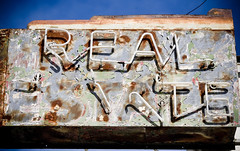
Commercial buildings, office buildings, Malls and the like, are the lifeblood of the REIT market. Even before the advent of REITs, investing in commercial real estate brought investors and speculators fortunes. Mostly those investors were already rich or well to do because the average retail investor could not afford to be in this market. REIT's changed all that as they began to trade on the markets much like stocks. During the great depression, a number of distraught investors actually jumped from the same buildings they had invested in. Hopefully that won't happen next year, at least, not to you.
If you are invested in a REIT or similar commercial real estate company, there are some things you need to understand, and you need that information now, before things start to unravel even more than they did earlier this year. Yes, I know that, many pundits are very bullish on this market but as Warren Buffett has put it, "you pay a high price for a cheery consensus".
Now, don't take just my word, or anyone's word for it. Look around you! The last time you went to a mall, how many stores were closed, or closing? Indeed, how many malls are still surviving? Over 200 malls in the United States were abandoned this year alone. Now think back to the last few times you went into an office tower in your city for an appointment. Did you notice a number of empty offices or companies vacating the premises? As these properties financing comes due, where are they going to find new financing?
The banks have had a good run this summer. I know. I just sold much of my bank stock today. (when you have a good run you should not fall in love with the stock you own, even if it is a bank with strong earnings. In this case, TD). Banks, particularly those in the U.S., would be the "second" domino to fall if the commercial real estate crashes. It could even be a "death blow" for some banks as their exposure is over $2 Trillion dollars to the sector which could lose as much as $1 Trillion in value.
REITs trying to re-finance properties this fall and early next year, will run into a wall. No one will want to lend them the billions required to re-finance their operations, especially banks that have been propped up by government bailouts. This does not include the 80 banks that have failed this year, or the 200-500 expected to fail in the next 12 months. Yes, that many, and those are the conservative estimates. Some analysts believe the number is closer to 1,000. Even after all that has happened over the last 18 months, the banks are still holding their cash close. However, if your REIT has solid management, is flush with cash and is keeping their powder dry waiting for the downturn, you might wish to hold on to your shares. Only the strong will feast on the many carcasses that will be strewn across the landscape.
Trust has left this market place. It will leave behind it's offspring, pain and loss!
Update: Sept 10th 2009 from New York Times. Corus Bancshares - First domino to fall.
(Contributed) This article by R.H. (Rick) Coyle is from his recent newsletter to his clients. Rick is an old friend and fellow Karate enthusiast who I trained with for many years. He is also a 30 year veteran financial planner, investment advisor and coach with Dundee Private Investors Inc.
Article:
I was recently looking at some pictures of a white water rafting trip I took with my wife ten years ago. As I was remembering the excitement and fear I started to think it had a lot in common with financial Planning.
First there is a starting point and a destination you are heading towards, the journey contains a lot of emotions, it can be hard work, and a lot of fun.
We had three choices; the Dead River (pretty calm), the Kennebec (has a little excitement), and the Penobscot River which had several Class 5 rapids to navigate. Which one you choose reflects your appetite for risk and excitement and the speed in which you make it to your destination.
We chose the Penobscot River which had the most excitement of course. Now you can choose to take the trip on your own or with a guide. We chose the guide because we did not have the knowledge or the skill to make this trip on our own. Our guide was experienced, looked fit, and gave us a brief talk on what to expect before we headed down the river. His experience and calmness inspired confidence in us and we were comfortable following his directions. He kept his instructions and strategy for getting down the river quite simple (kind of like a good financial planner).
Now there is more then one way to get down the river. You could swim it, which our guide did occasionally on his day off, you could canoe it, kayak it, or raft it as a group. We chose the raft (safety in numbers/diversification).
We started off in calm water for about an hour and then navigated a couple of class 2 rapids which were pretty easy and raised our excitement levels. The higher the number the more intense the rapids are. Class 6 is the highest. You could feel your pulse staring to accelerate and your senses heighten as we headed into a Class 4 Rapid known as guide killer hole. We were paddling hard taking direction from our guide and all of a sudden I was in the water wondering what happened. My life jacket (kind of like an Insurance policy ) kept me a float as I sucked in a couple of mouthfuls of water and decided to pick my feet up and enjoy the ride, knowing that eventually I would reach calmer waters (kind of like the Stock Market ).
Eventually the raft caught up to me and they pulled me on board to find out that my wife had also gone into the water as well. She thought it was so romantic that I jumped in to save her. With both of us back in the boat we headed to land to enjoy a steak barbecue and look at the Class 5 rapids we would be heading into on a full stomach right after lunch.
Knowing what to expect at this point helped, however as I looked at the thundering rapids I did briefly entertain the thought of bailing and not going through with the rest of our plan for making it to the end of the river (goal). The final stretch of our journey to our destination was intense and exciting and we all made it while staying in the raft. At the end we turned the raft around and paddled back into the rapids and surfed the white water. What a blast!
As we approached our exit point and could see the opening in the trees and our bus to take us back to the cabin it was a feeling of relief and self satisfaction that we faced our fears and accomplished our goal.
There were a number of things that made it a successful trip. First you had to actually start it. As Nike says "Just do it". Second you had to overcome some fears and third you had to stick to the plan despite some obstacles and set backs. Finally in deciding to go for it you made yourself as aware of the risks as possible and then managed them. We did this by first checking out the company we used, selecting a confidence inspiring guide, and wearing a life jacket and a helmet. After doing all of this we were able to focus on enjoying the journey as well as the good feelings and personal growth that come with achieving your goal.
Rick Coyle is a Financial Advisor/Coach with Dundee Private Investors Inc. He has 30 years experience in Financial Services. The opinions expressed in this newsletter are the opinions of Rick Coyle and are not to be construed as the opinions of Dundee Private Investors Inc or any affiliated company. The statements in this newsletter should not be construed as specific advice and may not be appropriate for your unique situation. Rates of return indicate past performance and past performance is not necessarily indicative of future performance. Mutual funds are not guaranteed or insured.
Rick can be reached at 902-678-1727. Email rcoyle @ ns.sympatico.ca
The United States dollar is going down! The U.S. Government will be over 13 $Trillion in the hole by the end of this year. Unless something drastic is done to reduce the slide, by 2015 it will be 23 $Trillion in the hole. This summer rally , (some green shoots aside) was predicated on the back of a sinking u.s. dollar . Many American investors are so busy getting angry and waiving the flag to prop up King Dollar , that they are blinded to one of the best investment plays this year and probably through 2010.
Smart Canadians are ignoring the whining from their own Governments and businesses about a high Canadian dollar being bad for exports and they are taking advantage of a situation that Ottawa doesn't want to acknowledge. The Canadian buck will outstrip the U.S. buck over the next year. So how can you play this for the betterment of your Retirefund?
Back in January, when the Canada buck was trading for around .77 cents U.S. I traded my u.s. dollars into Canadian dollars. I have gained about 20% with this simple strategy, however there is another good market strategy that I, and many others, are making some money with. Commodities such as oil, gold, natural gas, are denominated in U.S. dollars. If you bought some of these commodities, with your Canadian dollars, back in March, you have no doubt made good money.
Now, many Americans, whose pride (and pocketbooks) have taken a big hit during this dramatic downturn in their economy, are championing the return of King Dollar. Can't blame them. If your house is losing value, and your dollar is losing value, and the Gluttons of Wall Street have swallowed a good portion of your retirement funds, you are definitely in jam. However, average Americans are once again being led down the garden path into believing their dollar will go higher over the next few years. Feeding those false hopes, every time the dollar goes up a bit (as it did on Monday) the talking bull heads on CNBC (Kudlow, Kneale etc) waive the flag and declare the return of King dollar. I believe they couldn't be more wrong.
In fact, I am so convinced of this that, when I see a rise in the U.S. dollar, and a corresponding drop in our commodities market, I see it as a great buying opportunity for those commodities, especially if you are paying for your shares in Canadian dollars. As I have pointed out before, we have had the best balance sheet of the G20 for the past 8 years (We've been in the black until the crisis hit this year) Our banks have stayed conservative, avoiding the toxic Derivatives debacle and have entered this summer rally strong. We have the second largest deposits of oil and natural gas in the world, the largest deposits of potash, lumber, gypsum, seafood, nickel, uranium and arguably, diamonds. We own 20% of the worlds entire supply of fresh water, with only .03% of it's population. We own the largest claim to the arctic, which is suspected to harbor 25% of the total world's oil supply, and finally, the largest consumer on the planet, is right next door.
Don't get me wrong though. The Canadian dollar and commodities market is by no means the only place with good value these days. They will go sideways for the next month or so, but by the end of the year the Loonie will approach parity. The BRIC countries , or at least two of them, are good investments. (Except China for the rest of this year) The Australian dollar, who's commodities feed into the Chinese economic realm may also be a good bet. We have some excellent, small Canadian companies that are basically overlooked south of the border, until they dominate a market (RIM). They are essentially, under the radar, so to speak. Find them, research them thoroughly, ensure they have good management, good science and technology , and then don't be afraid to invest. You could hit the RIM of 2010-2011!
If you are American, you should be in the stock market right now. Having cash, or cash equivalents sitting on the sidelines for any length of time is a recipe for losses, period! Sadly, the gluttons of wall street are the ones who will actually benefit from the dollar crisis they have caused. Stock Markets go up as currency devalues. It is actually that simple.
The Canadian Government and Canadian manufacturing don't want a strong Canada buck, but they won't have any choice in the matter. It is time our manufacturing and export companies grow because of innovation instead of a weak currency. Those days are gone.
A Canadian buck with a 5-8% premium over the U.S. dollar (a la the 1950's and 60's), is a Loonie I can live with. All of our retirement funds, and our travel budgets, have gone up over 20% this year because of it. The Loonie now buys 20% more than it did 6 months ago. It will go higher still. Here is a quote from Warren Buffett from his "The Greenback Effect"!
"The world "properly" worries about greenhouse emissions causing global warming", says Buffett. "Unchecked carbon emissions will likely cause icebergs to melt. Unchecked greenback emissions will certainly cause the purchasing power of currency to melt. The dollar's destiny lies with Congress."
The Great Wall of China was built to keep out invading Mongols. It is not, however, keeping out billions of United States dollars. Those billions started flowing over the great wall, and into the great red business machine, shortly after George Dubya Bush was handed the first United States surplus economy in 30 years. It started when Bush 2 made his first massive tax cuts. It went on for the entire eight years of his presidency, accelerated by an unprecedented second set of tax cuts in a time of war on two fronts, something that no other President had ever done before It continues today, unabated and now, is actually accelerating.
Consequently, the worlds number one engine of growth, the good ole U.S.A. is in more debt than any country in history has ever been. (There may be an exception: Germany after WW1 when the allies demanded war reparations. During the 1920's and 30's, during the resulting hyper inflation, the average German would literally bring a wheel barrell full of German marks just to get groceries. The result was the rise of Hitler and world war 2)
Before last weeks massive sale of United States Debt in the form of Treasury Bills, China had accumulated foreign reserves of $2 Trillion. Of that, $1.6 Trillion was in U.S. Debt for which they made a return (direct payments from the U.S. Treasury) of over $40 Billion dollars last year. I repeat, that was before Tiny Tim went to China to sell another boat load of dollars in June, before last weeks summit (No not the beer summit, the "Chinese Money Monster summit") and it was before this weeks record breaking sale of U.S. Treasury Notes.
There is a saying that, if you borrow some money from the bank, it is your problem, but if you borrow a lot of money, it is the banks problem. In this case, the "bank" is the People's republic of China" which has been buying U.S. Government debt at an alarming rate. The borrower is the average American, their children, and their grandchildren, because it will take at least three generations to pay it back (expect a number of tax increases). The bank (read China) is getting nervous. They are demanding the U.S. provide insurance against a falling dollar to protect their investment. On top of that, there are rumblings that China has a debt problem of it's own as it's many local Governments are utilizing a loophole in their own banking system to siphon off equity from their own banks to pay for services (and graft which is rampant). Those banks will never see that money again.
This summer, as the rally picks up on North American Markets on the back of a sinking dollar, and another Trillion or so in Government largess, Newbie Chinese investors are diving into their own stock markets, driving up stock prices to dizzying heights, and that bubble can only end badly too.
Why would anyone think the Chinese might save the worlds economy? It will be hard pressed to save it's own. They do, however, have some padding. 1.6 Trillion in U.S. dollar denominated debt and the interest on that debt has to be paid from the U.S. Treasury. The Chinese fear they may end up with 50 cent dollars and they could be right. What a mess. The toxic Derivatives debacle perpetrated by the gluttons of Wall Street , is still the 10,000 pound gorilla in the room and no one wants to deal with it.
In this summer of 2009, the pigs at the trough are once again feasting on the unwary. In the mean time, we mere mortals have to decide what to do with our meager retirefunds. I can't tell you what to do, but I am in this summer rally and will remain so for now. September and October may be different. Certainly, 2010 is not looking anywhere near as good as the pundits in government or on CNBC would have you believe. Mr. Kneale of CNBC is calling this "The Great Recovery"! I sure wish he was right, but I fear a handle like "The Great Denial" would be more appropriate. A false economy led by taxpayer dollars, borrowed from friends who arn't friends, doesn't bode well for next year, or for that matter, the next 4-5 years. It may be that, hyper inflation will save America's bacon (heaven forbid)
Meanwhile, there are some great companies doing what they do best, no matter what the circumstances and you should be seeking them out during this rally. But don't take your eye off this bouncing ball. If it bounces too high, It may go right through the floor in 2010. Sorry I can't be more cheerful except to say, enjoy the ride this summer. This roller coaster may be the last good ride for a long time. Remember, when everyone else begins laughing hysterically, and pointing up, it may be time to jump to safety once again. But cheer up, 2015 isn't looking too bad.
Businessweek recently asked on it's blog if investing long term in the stock market is still a good strategy for your retirefund, or if a short term "trading" system might be more beneficial. Do you really need to ask this question?
Let's answer that with two more questions shall we! How many of you timed last years market plunge? How many of you "timed" this springs bounce? I thought so! If you didn't time either of these obvious opportunities, then why would you even consider trading short term? This is not to say that you shouldn't sell stocks. That is how you book real profit. However, if you buy a classic car at an auction, you don't sell it at the same auction. You bought it because it accumulates value, and that takes time.
Long term strategic investing in the stock market has returned the most value to investors than any other store of value over the past 100 years. It will continue to do so over the next 100 years. Why? To draw a simple analogy, the stock market for investors, is what the ocean is to sailors. If it empties, it won't matter what ship you have your family in because every boat will be on dry land. In investment terms, no other investment will stay afloat if the market is gone.
That is why you hear terms such as "a rising tide floats all boats" from investment gurus. It is the same analogy used when Warren Buffett says " when the tide goes out, you can see who has been swimming naked"!
Now let's draw another simple analogy for "today's market"! Currently the tide is very low and most boats are aground. If you pick the sturdiest, fastest boats from the ones that are currently stuck on the sandbars, you will definitely sail away and win the race when the tide comes in, and make no mistake. It will come in. It always does!
It was not uncommon for my father, who would have been 83 this year, to walk around on a weekday with $10,000 cash in his pocket. He was not a wealthy man, but ran a small business with approx. 20 employees. However he had the mentality of many others of his, the "greatest" generation, when it came to a healthy skepticism of the dependability of banks. The attitude came honestly as many of that generation had suffered through the great depression, and had lost all their savings when banks went bankrupt.
A good friend told me a story about a favorite aunt who always carried a satchel or briefcase, everywhere she went, all the time. When she died, her family was going to throw out that old satchel as they saw it as an eyesore. Before that was done, someone opened it and discovered it was stuffed with cash! Over $100,000 cash!
The same friend also told me that, when her Grandmother died, (the two elderly ladies were sisters), the family were going to throw out her old mattress when someone laid down for a minute and thought how uncomfortable it was. On further examination, they found it was absolutely stuffed with cash.
Now, we all know that this is not a recommended method of savings because of the dangers of robbery, loss, theft, fire etc. But these veterans of the Great Depression did what they thought was necessary to secure some of their future, rightly or wrongly. As I said, they just did not trust the banks.
Why did they lose their trust in the banks? Well, for the most part, many of those banks were under capitalized and when there was a run on the banks, they collapsed under the weight of so many people trying to retrieve their life savings.
Is that starting to sound somewhat familiar? Here in Canada the 5 major banks are well capitalized and in no danger of such an event. They wisely, for the most part, stayed clear of many of the toxic, derivative assets, that U.S. banks so greedily pursued. This was made clear after the downturn when our top two banks, TD Bank and RBC advanced into the top six banks in the world based on capitalization. They had been (I stand to be correct here) approx. 9th and 20th in the world before the downturn.
If you are reading between the lines, you have no doubt already come to the conclusion that many top banks in the United States were cut down tremendously, some to the brink of life support. The same goes for banks in Britain Germany, Spain (and throughout the Euro zone). Throughout this Spring, we heard bold financial results from many U.S. banks which far exceeded analysts expectations. However, can these numbers be trusted? If you take the numbers from these banks, leave out the Trillions in toxic Derivatives they still hold, add in the billions infused by the U.S. Government, then of course, the numbers will look great.
Once the Government largess is gone, and the Derivatives have to enter into the calculation (and these huge losses will have to be shown at some point) does anyone really think things have gotten better? Many banks in the U.S. and Europe are on life support, and will be for years. Our grandfathers didn't entirely trust the U.S. banking system, (or the stock market for that matter) and for good reason. Now it is our turn to make that determination.
Our problem is, What, exactly, do we stuff into our satchels or mattresses (or home safe). If you use U.S. dollars, you can count on a 20% to 40% drop in your assets over the next 3-4 years, and that's after losing what you have already lost. What holds value in these rocky times? Opinions vary on this, but I cannot help but think that Once the dollar continues it's slide (this weeks renewed strength is only temporary) that the stock market will benefit. It has too! And the part of the market that will benefit most?
6. Natural gas is currently undervalued and will be used extensively for the coming fuel cell revolution in power generation.
No, you cannot put these stores of value in a satchel or in a mattress, but you can spread them throughout your portfolio, either as individual investments or through the purchase of targeted mutual funds. If you're really nervous, a little Gold in the home safe won't hurt, and may give you some piece of mind.
The plan is not the problem. The "execution" of the plan is. I am constantly surprised (and then again maybe not) at the number of people who have told me exactly these words ( in a joking manner of course) when asked about their retirement. Sadly, for many, it is not a joke.
Statistics for the Baby Boom Generation, and the top of Gen X indicate that over 50% of people surveyed have saved "nothing" for retirement. Let me repeat that, "nothing"! Many more have "some savings and investments, but not enough to retire and will most likely keep working beyond 65 (unless of course, they win a lottery).
You know, it is never too late to invest. There is a well known saying that, "The best time to invest in the market is 25 years ago. The next best time is Right now"! The stock market has been the driver of wealth for 100 years. It will be the driver of wealth for the next 100 years. At this time of uncertainty and worry, it may be a good time to jump back into the market. Summer rallies are not a common occurrence, but they do happen.
Get good advice, invest over time (not in one chunk) spread your investments around many stocks/funds. (The same strategy that spawned the mutual fund industry). Don't listen to the naysayers, for they will surely come and question your sanity. When the naysayers (friends, family, co-workers) begin to tell you how you are wasting your money, ask them if the lottery is their Retirefund! Then watch them squirm.


![Reblog this post [with Zemanta]](http://img.zemanta.com/reblog_b.png?x-id=62693de3-bf93-4ce6-8a1d-0e9fc9f551d4)

![Reblog this post [with Zemanta]](http://img.zemanta.com/reblog_e.png?x-id=289f818d-009e-4484-a1ee-d5a976fc792e)
![Reblog this post [with Zemanta]](http://img.zemanta.com/reblog_e.png?x-id=0347b8ce-e771-4115-9765-3184fc4b38e4)

![Reblog this post [with Zemanta]](http://img.zemanta.com/reblog_e.png?x-id=ea452822-4b55-425d-be0e-99a2de19a009)

![Reblog this post [with Zemanta]](http://img.zemanta.com/reblog_e.png?x-id=527cbcfd-cf6a-4589-8de0-111ca139431c)

![Reblog this post [with Zemanta]](http://img.zemanta.com/reblog_e.png?x-id=89828fe2-8f34-4bd9-a9fe-dfa79c82fe90)

![Reblog this post [with Zemanta]](http://img.zemanta.com/reblog_e.png?x-id=de1b9592-6aa8-42c9-83e2-08aaa3664609)

![Reblog this post [with Zemanta]](http://img.zemanta.com/reblog_e.png?x-id=acd8ed41-087c-4cf5-b2f2-48fba8f4f8d7)
![Reblog this post [with Zemanta]](http://img.zemanta.com/reblog_e.png?x-id=058a93ec-ed7c-4320-92f0-12a3cf60cd99)