Showing posts with label Gold as an investment. Show all posts

Friday, January 18, 2013

Achtung! Germany wants its Gold back, Schnell!!

This week the German Central Bank (Bundesbank)  applied to repatriate its gold reserves from both the U.S. Federal Reserve Bank in New York and the French Central Bank in Paris.  (Think they know something we don't?)
Wonder if they trust their Central Bank counterparts.....hmmmm...

On another international note, Japan is doing whatever it takes to downgrade the Yen at this writing. (Yea another currency joins the race to the bottom)

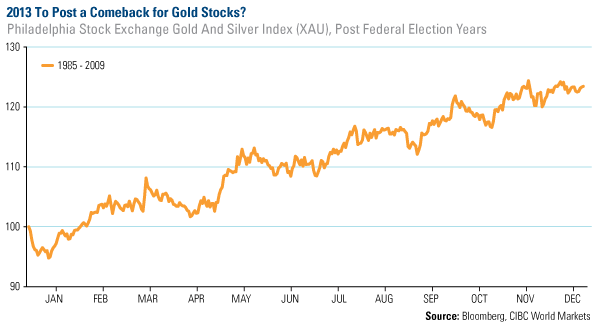
 While you are contemplating that, here is an interesting Chart from Bloomberg detailing the price of gold in the year after U.S. Federal Elections.

  If you dont own gold, may be you should buy some now!
 ED


COM-2013-Post-Comeback-Gold-Stocks-01112013
Enhanced by Zemanta

Thursday, November 22, 2012

Gold investment statistics commentary

Reprinted: World Gold Council Report

Quarterly statistics commentary Q3 2012

Download this document (0.2 MB)

Overview

This commentary summarises gold's price performance in various currencies, its volatility statistics and correlation to other assets, and the macroeconomic factors that influenced gold's behaviour during the quarter. In this issue, we explore the influences that unconventional monetary policy has on financial markets. In particular we discuss the effect of central bank policy actions on gold.

Q3 in summary

  • Gold (US$/oz) returned 11.1% in the third quarter as investors responded to further central bank measures aimed at stimulating the economy. Volatility decreased during the period, with gold prices experiencing little movement in the first half of the quarter; correlations to other assets, generally low, remained similar to those seen in Q2.
  • Central banks announced a continuation of their unconventional monetary policy1 programmes in Q3.
  • Central banks have numerous rationales for undertaking unconventional monetary policy, including lowering borrowing costs and supporting financial markets.
  • Financial assets have responded to central bank policy announcements, but gold's reaction has been the strongest.
  • There is a consensus that these policies drive investment into gold purely due to inflation-risk impact. We believe that there is not one but four principal factors that provide further support to the investment case for gold:
    • Inflation risk
    • Medium-term tail-risk from imbalances
    • Currency debasement and uncertainty
    • Low real rates and emerging market real rate differentials

Summary of gold price performance in Q3 2012

Chart 1: Performance of gold (US$/oz) price and volatility during Q1 2012
Table 1: Performance of gold with respect to various currencies - click to enlarge
Chart 1: Gold (US$/oz) performance and key events during Q3 2012
Table 2: Timeline of central bank action in Q3
Table 2: Timeline of central bank action in Q3 - click to enlarge

Third quarter review

By the end of September, gold (US$/oz) was up 16% year-to-date with two thirds of the gains generated in Q3. This performance was echoed in most currencies with returns ranging from 5.0% to 11.1%, using end-of-period gold price data, and 0.7% to 5.2% using average prices. The difference between these two measures reflects gold’s sharp price rise towards the end of the quarter.
Exchange rate shifts had a notable impact on some key regional gold prices. During the first half of the year Indian rupee depreciation caused the local gold price to breach a key psychological threshold, generating the strongest return of the 19 different currency-denominated gold prices monitored by the World Gold Council. That currency weakness reversed in the third quarter, leading to a modest return of 5% for gold in rupee terms. Consequently, the year-to-date performance of the rupee gold price ranked only 11th (+15.7%) as of the end of Q3.
As Chart 1 illustrates, gold’s strong performance began in earnest only in the latter half of August. The first few weeks of the quarter had been quiet for gold as well as other assets. For equities and bonds, the likely cause was a combination of northern hemisphere vacation doldrums and low conviction amidst a slowing global economy and uncertainty about the fate of the euro area.
For gold, as for many other assets, central bank policy announcements and actions in late August and early September created a catalyst for price activity. It is critical to note that while gold prices react to monetary policy developments, they are more generally determined by a geographically and thematically broad set of factors. A number of positive gold-specific developments also took place in Q3, including the IMF’s reporting of central bank purchases of gold by Russia, Turkey, Ukraine and the Kyrgyz republic. Just before the start of the third quarter, Turkey announced that it had raised to 30% the proportion of gold held by commercial banks as capital requirements. This requirement will likely boost demand as Turkish commercial banks use gold as part of their capital portfolios.
Price volatility during the period was subdued, ranging from 11.4% for rupee investors to 16.4% for yen investors. Gold’s lower than average volatility was echoed in other markets: global equities, bonds and commodities all posted numbers below their long-term averages.2
Correlation statistics between gold and other assets were similar to those experienced in Q2 2012 (see Chart 2). Its correlation to developed and emerging market equities was slightly higher than normal, but its correlation to global bonds and commodities was lower than in Q2. However, these deviations from long-term averages were not large enough to imply atypical behaviour. In prior quarterly commentaries we have shown how gold’s correlation to equities hovers around zero over the long run, but can fluctuate over shorter periods of time.
In particular, both gold and equity prices moved higher during Q3, leading to an elevated correlation. However, prices were driven higher by different underlying reactions. While both responded to monetary policy announcements and measures undertaken by central banks around the world, equities responded to central banks’ pledges to stimulate economic growth; gold, on the other hand, moved higher encouraged by factors that we discuss in the section titled “unconventional monetary policy and gold”.
Chart 2: Gold’s correlation to global assets
Chart 2: Gold's correlation to global assets - click to enlarge

Unconventional monetary policy

Events leading up to Q3 announcements

The key developments in Q3 were undoubtedly the series of declarations by central banks to expand their unconventional monetary policy programmes (UMP). Weak global macroeconomic data during the preceding quarters had created expectations among investors of further stimulus from major central banks. However, policy meetings were not scheduled until the latter half of Q3; thus, positioning for outcomes was kept on hold in anticipation of announcements. In addition, a concomitant slowdown in both India and China had also raised hopes that the Reserve Bank of India (RBI) and People’s Bank of China (PBoC) would act, fiscally or monetarily, to support their economies. Similar sentiment had been expressed in Brazil and South Korea.
As the quarter progressed, the case for further easing was emboldened by the weak incoming macroeconomic data. Global manufacturing indicators fell to a 36-month low in July – with noticeable slowdowns in the US and Europe.3 China’s industrial production growth reached the lowest level since May 2009, with GDP following suit to reach 7.6% YoY. The euro area contraction continued with 6 of 17 member countries in recession.4 Japan’s trade deficit quintupled to US$32bn, as a worsening export outlook compounded internal weakness.5 The news flow, though by now largely expected and supportive of further easing, helped drive asset prices higher across the board.
By the final week of August, the Federal Reserve (Fed) provided the first hints that it would consider an extension of its QE programme, despite some signs of housing and retail sector buoyancy. In addition, the European Central Bank (ECB) announced plans for its new bond buying programme on the premise of an ‘irreversible’ euro plagued by severe dislocations in the region’s government bond markets. By September, central-bank commitment to further stimulus had been announced in the US, Europe and Japan. China had launched a new infrastructure-spending programme to the tune of US$158bn, and India had vowed to lower its barriers to foreign investment.
The Fed extended its quantitative easing programme to an open-ended run rate of US$40bn per month. The ECB announced a new bond buying programme named “outright monetary transactions” (OMT), and the Bank of Japan (BoJ) announced a boost to its asset purchase programme, surprising markets by doubling the size of earlier extensions.
By the end of the quarter, gold was 11.1% higher, global equities finished up 6.2%, commodities were up 11.5% – the best performance since the first quarter of 2011 – and global bonds saw yields fall further and prices edge up 3.3%. Weakening economic data had finally spurred a concerted reaction by central banks, leading to a sharp rally in asset prices as the long wait for further easing came to an end.

Rationale and effect of unconventional monetary policy

Universally, the motivation for UMP is the need to remedy anaemic economic activity in the face of fiscal restraint and already exhausted conventional monetary policy. Central bankers hope a policy of asset purchases will, in the short to medium term, lower borrowing costs and increase perceived wealth through rising asset prices. The weakening of a domestic currency would also be a welcome spur for the export sector. Using these motivations, central banks have undertaken unprecedented monetary policies since 2008 (Chart 3).

Chart 3: Central bank balance sheets have collectively expanded
Chart 3: Central bank balance sheets have collectively expanded - click to enlarge
Despite the difficult environment for central banks, they have arguably achieved some successes in financial markets: as the Bank for International Settlements (BIS) asserts, “unconventional monetary policy likely helped prevent further catastrophe after the global financial crisis and helped secure liquidity in Europe during the peak of its crisis.”6 These actions have, in aggregate, supported credit as well as equity markets (Chart 4). They have bought time for banks and governments to address solvency issues, lowered debt-servicing costs, and boosted asset prices and corresponding sentiment based on perceived wealth creation. However, few of these positive effects are directly linked to underlying growth.
Chart 4: Asset returns resulting from central bank actions
Chart 4: Asset returns resulting from central bank actions- click to enlarge
“Monetary policy is not panacea,” Fed Chairman Bernanke said during a Q&A session in June. There are a number of potentially negative consequences, including the returns for savers and shortfalls for pension and insurance funds, food price inflation, and ‘moral hazard’ in financial markets. These and other consequences are well documented.7
While the highlighted longer-term reaction of assets has largely followed expectations, as shown in Chart 4, there have been a few exceptions. Equities in Europe and Japan have fallen since the advent of UMP. In addition, strong initial responses to announcements of monetary policy – both initiations and extensions of programmes – have tended to fade. The FTSE 100 has gained a mere 2% since November 2008, despite positive jumps following announcements. Finally, the yen has disappointingly kept rising despite aggressive easing by the Bank of Japan, further hurting the critical export sector.
We may not know for some time if these untested central bank policies will work for the real economy. In fact, Bernanke, in his most recent speech at the Fed conference in Jackson Hole, said “In summary, both the benefits and costs of non-traditional monetary policies are uncertain; in all likelihood they will also vary over time depending on factors such as the state of the economy and financial markets, and the extent of prior Federal Reserve asset purchases.” Recent academic research supports this uncertainty of success and the fleeting impact of current measures.8

Unconventional monetary policy and gold

A common perception is that UMP has a singular effect that is reflected in gold price reactions – the rise in inflation risks. However, a closer look shows that unconventional policy affects gold through four principal channels. While these effects will to some extent be present in conventional policy easing, they are exaggerated by unconventional policy.
First, Inflation risk is understandably the strongest rationale for gold’s reaction to unconventional policy. There is a well-established relationship between the amount of money in an economy and the rate of inflation – whereby too much money chasing too few goods causes price appreciation. However, this is not a straightforward relationship, and inflation can be contained if economic growth keeps pace with money supply growth.
Current unconventional policy has increased the monetary base in most countries without increasing the money supply (Chart 5). This is largely due to a tightening of commercial bank lending.9 The distinction is important: a simple metaphor might be a cheque that is yet to be cashed. While recent evidence shows that central bank balance sheet expansion has not fed through to an increase in money supply growth, money supplies are likely to increase over the long-term when the liquidity in the system translates to private sector spending.
The increase in money supply could be a potential catalyst for higher inflation in the future – a likely positive for gold investment. Previous research by the World Gold Council shows that a 1% change in money supply, six months prior, in the US, Europe, India and Turkey tends to increase the price of gold by 0.9%, 0.5%, 0.7% and 0.05%, respectively.
This crisis has forced central banks to aggressively fight against the risk of deflation. While a deflationary spiral is the greatest tail risk for many of these central banks – even low levels of inflation and dis-inflation could be troubling given high public debt levels in most advanced economies. In this context many market participants speculate that central banks have actually increased their tolerance for inflation, exceeding target levels for brief periods of time to accelerate the deleveraging process. To this end, some point to Bernanke vowing to not withdraw stimulus “[prematurely]”, suggesting an acceptance of higher inflation down the road. Similarly, the Bundesbank head, Jens Ulbrich, announced in May that a slightly higher inflation target could be accommodated.10 While the inflation needle has yet to move, there appears to be a willingness to tolerate a higher rate of inflation in future to ensure the sustainability of fragile economic growth.
Chart 5: Money supply growth has not kept up with central bank asset purchases
Chart 5: Money supply growth has not kept up with central bank asset purchases - click to enlarge
In summary, while inflation is to many investors a primary concern, it is still some way off.  The near term threat of deflation remains real, and as long as central banks are willing to resort to unconventional measures, this will imply that the deflationary threat has not disappeared.
Research by Oxford Economics shows that both inflationary and deflationary environments could be conducive to gold investing. While gold’s performance during periods of high inflation is well understood, the deflationary environment is less understood. Using its global macro-economic model, Oxford Economics found that despite currency related headwinds, a deflationary environment would prove destructive to risk assets such as equities and housing, with gold outperforming.
Second, closely linked to the inflation effect is the impact that unconventional policy has on currencies. Although seldom explicitly stated, a weaker currency is a desirable outcome for most economies in the current environment. As global trade slows, a weaker currency becomes all the more important to maintain export competitiveness. While the term ‘competitive devaluation’ may be a little dramatic, the problems of currency strength are evident.
If a desired indirect effect of expansionary monetary policy is a weaker currency to promote export-led growth, then at least on that front, central banks like the BoJ and the Swiss National Bank (SNB) have not succeeded. Both the BoJ and SNB have had to resort to several episodes of intervention to prevent their currencies from rising too quickly. Elsewhere, countries have voiced their concerns over the ramifications of UMP. Sweden’s Riksbank will be monitoring the exchange rate closely after posting an “unexpectedly” rapid appreciation in Q3.11 The Norwegian sovereign wealth fund has been selling the krone to counter investment flows, and the central bank has not ruled out currency intervention to maintain its inflation target.12 Most recently, Brazil’s finance minister, Guido Mantega, expressed anger at the Fed over QE3, which he termed a “protectionist” move.13 Given that gold is typically transacted using its US-dollar price as reference, it naturally provides a hedge against an investor’s concern over domestic currency debasement; this is especially true for US dollar-based investors who typically see a negative correlation between the US dollar and gold.
Third, the willingness of central banks to engage in protective strategies provides an implicit ‘put’ option – an implied guarantee to prevent precipitous falls in asset prices. This, however, raises the risk of undermining the efficient flow of capital, which could foster new and dangerous imbalances in the global economy. By vowing to intervene to prevent slides, some of the tail risk has undoubtedly been removed in the short term. However, by extension, the distortion created by intervention can have a longer term impact on tail risks by incentivising credit buildups and the inefficient allocation of capital to firms and households at an artificially low interest rate.14
With increased tail risk looming in the longer term, investors need to take these rallies in financial markets with caution. As investor sentiment on the efficacy of central bank policy changes, equity markets might give away some of the central bank-led gains. During times of crisis and sharp market pullbacks, gold has proven to be an effective diversifier. Research shows that gold could play a role as a tail risk hedge by protecting investors against falls in equity and credit markets.
Fourth, an environment of unprecedented low interest rates – negative in real terms – can greatly impact savers and investors. In our Q2 commentary, we discussed the skewed risk/reward scenarios that investors face in such low-rate environments. One motivation for unconventional policy, to further depress interest rates, stems from the belief that households will increase their expenditures. However, prudent households will have to save greater sums of money to pay future obligations in a low interest rate environment. The almost universally negative real savings rates in developed countries are likely to see a shift of saving to real assets that will provide long-term real security.
In addition, the relatively higher real rates across emerging markets are attractive for investment flows into those countries from western investors as risk adjusted returns appear more favourable. Developed market currency weakness amplifies the attraction of emerging market investment. Flows of capital to emerging markets have a clear impact on wealth creation – a principal driver of gold demand in emerging countries.15

Conclusion

Most central banks currently view their country’s economic state as unacceptable and have acted to accelerate the economic recovery. However, there are many obstacles facing developed countries that will force central banks to continue their unconventional monetary policies. In the US, the Fed is motivated by the ailing labour and housing markets and would like unemployment and inflation to be closer to normalised levels. The market expects partial normalisation to begin around mid to late 2014, though if Japan were to be used as a guide, a prolonged period of subpar performance may lie in store. BoJ’s policies have set a precedent in unconventional monetary policy duration as they are now in their 12th year. The ECB is caught between regional recession coupled with fiscal austerity and a prolonged period of intervention before growth and price stability are restored to a consistent path.
The backdrop of negative real yields, a slow recovery and a likely continuation of expansionary monetary policies – with all the risks these present – provides further support to the long-term strategic investment case for gold.
1Unconventional monetary policy refers to measures used to provide liquidity once policy rates are at the zero bound.
22 Long-term average volatilities (December 1987 to date): Gold (15.7%), Global equities (15.2%), Emerging markets (18.8%), Global bonds (5.5%), Commodities (21.4%), US dollar index (8.6%), Q3 volatility: Gold (14.4%), Global equities (12.8%), Emerging markets (15.6%), Global bonds (3.8%), Commodities (18.1%), US dollar index (6.7%).
3The US ISM survey has ticked up in September to 51.5, down from a high of 60 in January 2011.
4NBER definition of two consecutive quarters of negative growth.
5Gross debt reached 236% of GDP and the budget deficit 10% of GDP.
6BIS Annual Report 2011/2012, Neely, Christopher J. The large-scale asset purchases had large international effects, 2012.
7BIS Annual Report 2011/2012, White, 2012. The unintended consequences of loose monetary policy. Economist, QE, or not QE?, July 2012.
8Berkmen, S. Bank of Japan’s quantitative and credit easing: Are they now more effective?; Gambacorta et al. The effectiveness of unconventional monetary policy at the zero lower bound: A cross-country analysis, 2012. Kozicki et al. Unconventional monetary policy: The international experience with central bank asset purchases, Bank of Canada review, 2011.
9Under the ‘transaction’ motive of money, nominal GDP equates to demand for money.
10Bundesbank prepared to accept higher inflation, Spiegel online, May 2012.
11Minutes of the (Riksbank) monetary policy meeting, September 2012.
12“Norway won’t tolerate persistent Krone Gains, Qvigstad says”, Bloomberg, August 2012.
13Financial Times, September 2012.
14Reinhart and Reinhart. After the fall, 2010. Jorda et al. When credit bites back: leverage, business cycles, and crises, 2012.
15World Gold Council, India: heart of gold: strategic outlook. World Gold Council, China gold report: gold in the year of the tiger.

Investment statistics commentary archive

The quarterly Investment Statistics Commentary succeeded the Gold Investment Digest (GID), which was published between Q3 2006 and Q2 2011 and examined trends in price, investment markets and the macro-economy relating to gold and other assets typically found in an investor portfolio.
The Commentary complements the investment statistics analysis updated on a regular basis.
Investment statistics commentary Q2 2012
Investment statistics commentary Q1 2012
Full year 2011 - Download this do
Enhanced by Zemanta

Wednesday, December 28, 2011

Buying physical Gold and Silver may be the best course in 2012.

Did Bankers Deliberately Crash MF Global to Crash Gold and Silver Prices?

December 27th, 2011
Did bankers use the MF Global bankruptcy to suppress gold and silver prices and create the panicked appearance of collapsing precious metals to give themselves additional precious time to delay the crash of the Euro and the US Dollar? As crazy as this sounds, a closer investigation of some key data seems to imply this possibility. Though bankers claim that they created futures markets to provide a mechanism for commodity producers to hedge against volatile market prices, I have never bought the kool-aid the bankers were selling in this explanation for the rationale behind their creation of futures markets. Given that today, futures and spot prices for gold and silver in the short-term are entirely set by banker manipulation of the supply and demand for paper derivatives that often have no backing of any physical metal, I believe that bankers created futures markets for the explicit intent of allowing themselves to manipulate the prices of commodities and to enrich themselves, and themselves only, through the process of alternately and artificially inflating and deflating prices as would not be allowed in any type of free market. In other words, bankers invented futures markets to allow themselves to siphon off and steal money from other parties that wanted to invest in commodities with a mechanism, risk-free to them, that required deception and zero honest work and zero integrity.

The futures markets in commodities is such a deceptive market that it is hard to know even where to begin to unravel its many mechanisms of deceit in all their glory. Futures contracts traded on the world’s largest commodity markets such as the COMEX in New York and the LBM in London allow bankers to commit reverse alchemy, turning real physical gold and real physical silver into nothing but false paper contracts and air. Secondly, through futures contracts traded in New York and London, bankers routinely defy the economic principles of supply and demand, and set short-term prices for gold and silver that literally have zero to do with the supply and demand dynamics of the physical gold and physical silver market. In the world of physics, such an illogical, comparable feat of deception would be the indefinite suspension of the law of gravity. Bankers invented paper derivative gold and silver markets to allow themselves to literally defy and suspend every single sound economic principle that exists.

This is important to understand because not only does understanding this concept make the bulk of what you learn in business school a lie and entirely useless, but also because bullion banks such as Deutsche Bank, Citibank, JP Morgan, Goldman Sachs et al that serve as the puppet conduits for more powerful families that control Central Banks, routinely used to lease physical gold into the open market as their primary mechanism to suppress the price of gold and silver. However, as their mechanism of fractional reserve banking began to threaten the viability and utility of the most widely used fiat currencies in the world, the USD and the Euro, bankers understood that they needed to utilize and/or create another mechanism to suppress gold and silver prices that could replace selling physical PMs into the open market as they no longer wished to give up a solid asset with no third party counter-risk for what they knew they were turning into essentially worthless pieces of paper. Thus bankers increasingly turned to the paper futures markets to manipulate and control the price of gold and silver and also served up additional bogus derivative products to the public like the GLD and SLV ETFs. Bankers knew that there was no way they could possibly control the price of gold and silver if the supply and demand determinants of physical gold and physical silver had anything to do with the price, so they conspired to fool the world into believing that the fake paper price they set was set by the supply and demand of the physical markets.

Collapsing OI of Gold/Silver Futures Markets Directly Related to MF Global Collapse?

And here’s where MF Global enters the banking cartel gold and silver price suppression scheme. Today, short-term futures and spot prices of gold and silver have almost nothing to do with the physical supply and demand dynamics of gold and silver, as odd as that may sound. Bankers created the futures markets and paper derivatives in gold and silver to kill free markets and for the express purpose of suppressing gold and silver prices. Today we literally have no idea what the free market price of gold and silver should be or could be, besides the fact that both would be multiples higher than their current price, because of the fake paper market in gold and silver that the bankers created.

As well, bankers ensured that they armed a legion of worker bees in commercial investment firms all over the world that would represent these paper derivatives backed by very little physical gold and silver to their clients as the equivalent of investing in 99.999% pure physical gold and silver. In doing so, the worker bees thereby lured people all over the world into what will turn out to be the fatal mistake of not buying millions of troy ounces of physical gold and silver and instead buying their offering of fool’s gold and fool’s silver. When we receive a massive default of gold and silver futures contracts that stand for delivery on the COMEX or LBM, or if the SLV and GLD default, then, and only then, will the public start to see true price discovery of physical gold and physical silver in action. However, for clients of MF Global, unfortunately, they have already experienced the mistake of buying fool’s gold and fool’s silver from the bankers and have received air in exchange for gold and silver futures contracts they purchased that stood for delivery.

Bankers invented fake paper gold and silver contracts, because they knew that if they could not fulfill contractual obligations to deliver physical gold and physical silver because the contracts were a binding lie to begin with), that they could always renege on these contractual obligations and give the people the nothingness they truly owned in return. And thus, we have the story of MF Global.

Ratings agencies downgraded MF Global on Oct 25 and MF Global declared bankruptcy on Oct 31. If one scours the data that the Chicago Mercantile Exchange (CME) releases via its aggregated Commitment of Trader (COT) reports during this time period, one may not notice any data that immediately stands. However, investigation of the disaggregated reports reveals far more interesting patterns that almost undoubtedly can be traced back to the collapse of MF Global. In a period just preceding the MF Global collapse, from late August to mid October, the open interest (OI) in longs in gold and silver futures within the Managed Money category collapsed by 33.75% in gold (202,430 to 136,103) and 44.74% in silver (29,849 to 16,494). During this exact same time period, shorts in the gold and silver futures in the Managed Money category increased by 19.3% and 83.82% respectively (see the chart below). Within the Managed Money category, between Sept 13th and 27th, in just a two-week period, the drop in OI in the longs in gold and silver futures was even more pronounced, with a 25.41% plunge and 34.3% plunge in silver. I imagine if someone could trace the connection of this plunge in OI in the Managed Money category in the gold and silver futures markets, one would discover that a good deal of the plunge was somehow directly tied to the impending MF Global bankruptcy and its freezing and/or liquidation of gold and silver futures accounts in its possession.

After Phase I of the collapse in OI in the gold and silver futures markets, Phase II followed. When the story about MF Global’s legalized client theft hit the presses, an enormous public distrust of the entire futures markets started to build. If clients lost millions of dollars in gold and silver futures accounts due to forced liquidation or freezing of contracts that they were holding for delivery, anyone that had considered using the futures markets to take delivery of real gold and real silver following the MF Global debacle obviously reconsidered their options. Thus, due to the massive fraud of the futures markets that was revealed by the MF Global collapse, another huge drop in the OI of gold and silver longs in the Managed Money category occurred during Phase II (as labeled in the above chart) that respectively amounted to an additional respective 11.79% and 7.48% plunge. In essence, it appears that the MF Global collapse served up the exact same price suppression effect as a CME issued initial or maintenance margin hike in gold and silver futures, which forces a tidal wave of unwanted and involuntary liquidation of gold and silver longs that consequently violate technical support lines and trigger technical sells.

Of course, we also have to factor in the temporary OI-increasing effect of the risk-on CME event when they lowered initial margins to a 1:1 ratio with maintenance margins at the onset of November. Still, given the figures presented in the chart above, it seems that bankers used the MF Global collapse to force liquidation of gold and silver longs in the futures market quite rapidly and drastically. Why is this important? This is important because typically strong hands ride out any temporary banker manipulations of gold and silver prices downward. In this case, strong hands, if they existed at MF Global, were not given this opportunity and were forced to liquidate or had their accounts frozen whether or not they desired such an outcome. Furthermore, if primarily strong hands were forced out of the futures market, this would leave the majority of volume in the gold and silver futures markets primarily in the hands of the criminal banking cartel. We’ve seen repeatedly, this past year in the US S&P 500 index, when low trading volume primarily controlled by the banking cartel has translated into curious and inexplicable market bounces of 2% in a single day. In other words, low trading volume allows bankers excessive and easy manipulation over markets. If this was indeed the scenario bankers deliberately created with the MF Global collapse, then the MF Global collapse and simultaneous collapse of open interest in gold and silvers futures certainly would have paved the way for the banking cartel to easily manipulate gold and silver prices.

There was also further circumstantial evidence that bankers used the MF Global collapse to collapse gold and silver futures markets at the end of 2011. For example, in an article posted on the SilverDoctors blog by Jim Willie in which he gathered data regarding the amount of physical gold and silver ounces represented by the longs at MF Global that were standing for delivery in the futures markets before these contracts imploded, he stated: “JP Morgan increased the amount of registered silver and gold by precisely the amount that was suppose to be delivered [by MF Global]…JP Morgan effectively averted both a Comex default and a European Sovereign Debt implosion.”

Silver Lining in the MF Global Debacle?
Can there be a silver lining in the MF Global debacle? I believe that in the long-term, this extremely unethical, negative event could transform into a positive game-changer in the way people buy large amounts of gold and silver. Obviously, the futures market is not a safe market for anyone seeking to take delivery of millions of dollars of physical gold and silver as many MF Global clients learned. The GLD and SLV ETFs, of course, are no safer than any gold or silver futures contract for the same reasons. So in the future, and I mean the immediate future starting now, I believe that large buyers of physical gold and silver will now opt to bypass the bullion bank’s middle men in the futures market and go directly to the gold and silver mining companies to buy large quantities of bullion. This should eventually help usher in the death of futures markets as a mechanism for buying physical gold and physical silver and be a step towards establishing a free market for gold and silver prices for the first time in our lives. Mark Cutifani, CEO of AngloGold Ashanti, recently echoed the same: “Major [asset management fund] buyers are finding it is hard to get physical gold. People are coming directly to us [for large gold purchases,] people who want tonnes of physical gold, people with serious financial muscle, because they are finding it is very difficult to secure the volume of gold they want. That is something we have noticed over the last 18 months, and it has been increasing in the last six months. People are finding it’s hard to get physical gold.”

People that want to own physical gold and physical silver never should have been buying the GLD, SLV, or gold and silver futures. Now, in light of the MF Global debacle, scores of people will stay away from these fraudulent vehicles for good.

About the author: JS Kim is the Chief Investment Strategist and founder of SmartKnowledgeU, a fiercely independent investment research and consulting firm with a mission to help re-establish the monetary freedom that bankers have stolen from us. Despite believing that gold and silver will remain highly volatile in 2012, JS believes that long-term holders of physical gold and silver will be richly rewarded as bogus paper gold and silver derivatives start collapsing and reach their intrinsic value in coming years. Follow JS on Twitter and Facebook.

Enhanced by Zemanta

Thursday, December 8, 2011

Gold and Silver Mining Stocks Offer the Best Value of Any Sector in the Stock Market By a Wide Margin

By J.S. Kim, Smart Knowledge University.

Today, gold and silver mining stocks offer the best value by far of any sector in any stock market anywhere in the world.

Due to the recent massive volatility that bankers have introduced into the PM stock sector, and the fact that commercial investment advisers worldwide have erroneously re-educated millions of people with the concept that volatility equals risk, the majority of people worldwide will miss a massive opportunity in gold and silver mining stocks over the next several years due to their misguided belief that gold and silver mining stocks cannot escape the throes of banker manipulation.

There has been much acceptance of the theory that Central Banks and bankers perpetually manipulate gold and silver spot prices through the gold/silver futures markets due to strong circumstantial, non free-market evidence such as gold/silver futures prices being significantly higher in Asian futures markets versus Western futures markets for long stretches of time as well as out-and-out flagrant behavior such as the irrational raising of initial and maintenance margins on silver futures five times in nine working days into falling prices instead of into rising prices. For those not aware of the multitude of schemes Central Banks execute to suppress gold and silver futures prices, please refer to this article, JS Kim Uncovers Four Parallel Markets for Gold, when during the Wall Street collapse of 2008, bullion banks (controlled by Central Banks) routinely knocked the gold futures price down by $10, $20, $30 and sometimes even $40 an ounce usually right at market open of the NY COMEX at a time when gold was trading at less than $900 an ounce and such movements reflected 2%+ to 3%+ waterfall movements downward in price (comparatively speaking today, such percent movements would consist of $40 to $50 an ounce movements downward.

Since then, bullion banks have executed this scheme over and over, pulling bids at the market open of the NY COMEX to cause a waterfall decline in gold futures prices in a matter of a few minutes. Throw in for good measure that you can check all US holidays when the COMEX is closed for the past five years and you can find nary a day when gold is not higher or at least about even, simply for the reason that the NY Comex is closed and the Western banking cartel is non-operational in the gold/silver markets on these days. If this circumstantial evidence, literally the tip of the iceberg in the mountain of circumstantial evidence of banker price suppression schemes against gold and silver futures, is insufficient to convince the most stubborn of skeptics, then consider former US Federal Reserve Chairman Alan Greenspan’s statement in 1966 that:
“An almost hysterical antagonism toward the gold standard is one issue which unites statists of all persuasions. They seem to sense – perhaps more clearly and subtly than many consistent defenders of laissez-faire – that gold and economic freedom are inseparable, that the gold standard is an instrument of laissez-faire and that each implies and requires the other.” 

Would not statists that support the doctrine of seizing centralized control over economic planning and monetary policy, not covertly and actively suppress the price of gold, if the most famous Central Banker himself stated that they possess “an almost hysterical antagonism” towards gold? Today, nearly half a century later, banker propaganda and re-education campaigns regarding gold and silver have been so successful that Greenspan’s accusation that many defenders of the laissez-faire doctrine fail to recognize that gold and economic freedom are inseparable still stands true. I’ve read numerous essays by those that argue for less government interference in business and monetary affairs and for stronger free markets but yet vehemently deny that bankers ever interfere in gold and silvers futures markets through active price suppression schemes.

However, as I’ve written extensively about this topic for six years at my investment blog theUndergroundInvestor.com and will address this topic further in two books I will release by year’s end, I do not want to stray from the main topic of this essay: Gold and silver mining shares offer tremendous value and tremendous upside right now due to the fact that bankers have worked very diligently to suppress the price of gold and silver mining shares for the past 12 months.

I’ve always been surprised over the years by the lack of accusations from the CEOs of the mining world that one of the primary reasons, if not the primary reason, for the underperformance of their share prices in recent years are banker price suppression schemes enacted against the PM shares. I realize that many industry analysts refrain from making this accusation due to the fact that they are being afraid of labeled by their peers or superiors as “loony, conspiracy theorists” but who cares if someone at the CFTC or some top PM analyst at Goldman Sachs or Citigroup calls you a “loony”. Due to macro and micro-economic predictions that have the track record equivalency of Ben Bernanke, most of these guys have as much credibility as a talking dolphin, so to be discredited in an ad hominem attack by any of these guys should truly pose no worry. However, nearly all mainstream gold/silver analysts appear to still engage themselves in censoring the truth due to concerns of being ostracized by the mainstream financial industry. As far as I’m concerned, being ostracized by the criminal mainstream financial industry, in my opinion, should present one with the mark of credibility.

When I first started publicly speaking about the banker executed price suppression schemes against gold and silver futures prices six years ago, bankers tried to discredit and call me crazy back then, but now, six years later, such explanations for inexplicable movements downward in gold/silver futures markets when physical supply/demand fundamentals demand upward price movements are at times, even accepted by the mainstream media, or at a minimum, now reported by them instead of being ignored by them. These are huge steps forward in dispensing the red pill of truth to skeptics regarding the true reasons behind volatile price movements downward in the gold and silver markets. Furthermore, whenever I presented factual evidence of the manipulation in gold markets, most banking analysts that disagreed with me countered my arguments with simple ad hominem attacks that never once provided a solid refutation of, nor a credible argument against the evidence I presented, circumstantial and factual (in the form of Central Bank documents that specifically addressed their desire to suppress gold prices). I believe the same three stages of truth as described by German philosopher Shopenhauer, will also manifest itself in regard to PM mining shares just as they have manifested/are about to manifest with gold/silver prices: (1) First, truth is ridiculed; (2) Second, truth is violently opposed; and (3) Third, truth is accepted as self-evident. Finally, if people so widely accept now that bankers are interfering in suppressing much higher free-market prices from operating in gold and silver futures markets, is it really that much of a deductive leap to assume that they would also be interfering in suppressing free-market prices in gold and silver mining shares?

As is the case with the behavior of gold/silver futures markets, numerous illogical anomalies that manifest themselves with regularity in the gold/silver mining shares first made me suspect that bankers were routinely interfering with the prices of gold and silver mining shares. To illustrate my point, let’s look at the performance of a couple of flagship gold and silver mining shares versus the performance of some flagship retail and financial shares.

From the chart above, you can see that the mining shares either significantly outperformed or astoundingly outperformed non-mining industry companies with a similar market cap size in simple financial metrics except for share price appreciation in the last year, a category in which they astoundingly underperformed their competitors. I am not. In the case above, I have only provided a very basic example to illustrate how drastically undervalued share prices of producing gold and silver companies are right now. I fully realize that I am not comparing apples to oranges, but I merely wanted to illustrate how companies’ share prices with healthy earnings and revenues outside of the mining sector act, since bankers have targeted gold and silver mining shares as a sector for price suppression schemes. Thus, I had to look outside of the PM sector to provide examples of what should be happening with the PM mining share prices. And I only call the other company “competitors” of the mining stocks because the goal of commercial investment industry analysts is to prevent you from buying the most undervalued stocks in the entire market and to keep you invested in overvalued and overpriced stocks. After all, when gold and silver mining stocks finally get going in their next upleg, which may be very soon, investors will naturally want to also invest in physical gold and physical silver and thus dump the broad stock market index portfolios they may currently maintain. So in essence mining stocks are competitors of the retail and tech stocks though most would say they are not.

Furthermore, most would argue that substantially lower prices in the price component of PEG ratios are justified for the mining sector due to the typical volatility of mining shares, but this past year, this argument only serves to support my thesis regarding the fact that mining shares are the most undervalued sector and the most underappreciated sector in the market right now. Sectors that are viewed as volatile typically are expected to have lower share prices to compensate for the added risk of holding shares in that sector. However, this year, given that the broad stock market index of the S&P 500 has traveled an incredible 1,230+ points up and down since May 1st but has remained relatively unchanged in value, extra volatility of mining shares over components of broad stock market indexes does not justify lower share prices of the mining stocks. Furthermore, because banker attacks on gold and silver mining shares, whether achieved by indirect take downs of gold/silver futures prices and/or direct sell-offs of the shares during times of low volume trading, are responsible for the added volatility of PM shares, arguing that the volatility of the sector justifies lower PM share prices also loses credibility.

Even if we disregard this admittedly circumstantial argument, if we compare the trading ranges at which these four stocks traded at during most of the past 12 months, the volatility comparisons do not justify the huge differences in the PEG ratios of the past 12 months between the PM stocks and the stocks that trade on the broader stock market index. Chipotle traded between a range of $270 and $340, or a 25.93% spread for most of the year while Silver Wheaton traded in a range between $30 and $40 a share, or a spread of 33% most of the year, though both stocks traded both higher and lower than these ranges for short periods of time. Though this is but a comparison of two stocks out of hundreds of mining stocks and a couple thousand NYSE stocks, and though some may argue that Chipotle is overvalued at its current share price and PEG, many PM mining stocks across the board are flush with huge cash reserves, soaring revenues, double digit earnings growth for several consecutive quarters, but yet have experienced stagnant or even negative share price growth over the past 12 months. Again I am only comparing Chipotle to Silver Wheaton to highlight the massively manipulated state of flagship gold and silver mining companies over the past 12 months and not because I think a direct comparison is the most apropos one.

Besides the totally illogical performance of Barrick Gold and Silver Wheaton above when considering their PEG ratios and their massively positive earnings growth over the last year, I have witnessed numerous anomalies over the past decade that convince me beyond a shadow of doubt that bankers manipulate the prices of gold and silver mining stocks downward on a persistent and consistent basis to prevent the masses from understanding that ownership of physical gold and physical silver will liberate them from our current morally bankrupt, illegitimate and unconstitutional monetary and banking system. For example, during dozens of options expiration days over the past five years in particular, I have witnessed uptrends in the price of numerous mining stocks stall and shed 3% to 4% from the previous day’s market close on literally no negative news other than the fact that it was OpEx day. And usually the prices of mining stocks, on days when this happens, gap down significantly on market open. Then, the following Monday after OpEx day is finished, the uptrend in mining shares will resume. Yes, one can call this behavior coincidental but anyone that does so would be dismissing the laws of probabilities and calling for a new mathematical paradigm to apply only on OpEx days. The percent chance that attributes such regular and repeated price action behavior that occurs only on OpEx days to the probabilities of “random noise” would likely come in at less than a fraction of 1%.
For the first time I can recall in recent times, the CEO of a major PM mining company finally spoke out about the ridiculous and likely intervention of the banking cartel in suppressing the price of not only PM futures but PM share prices. Keith Neumeyer, the CEO of First Majestic mining, recently voiced his opinions behind the downward price volatility not only of gold/silver futures but of gold/silver mining shares: “I don’t think supply and demand has anything to do with the price [of silver], unfortunately. The world we live in today is a paper environment where silver is priced by financial circumstances. Banks, traders and investors around the world move markets to where they want them to be. Governments and commercials—big banks like HSBC and JP Morgan—all have a piece of the action. They alternately work together or sometimes against each other. All these forces price the metal. That’s one reason we’re seeing the volatility that we’re seeing today.” Dramatic silver volatility “has to do with the financial instruments that we trade in and with the fact that silver trades a billion ounces per day on the COMEX alone when there are 26 to 30 million ounces of silver available for delivery. With that kind of leverage, you just don’t have a proper market… The governments, regulators and bullion banks have let the silver market get more and more leveraged. We’ve seen a lot of wealth destruction as a result of this leverage and we’re going to see a lot more until, finally, the governments decide to change the system.” With these scathing comments about the casino like nature of banker-rigged gold and silver markets, Neumeyer hit the nail squarely on its head.

Unfortunately, governments, because they are partners with the bankers in this system of cronyism, will never voluntarily change the system. Thus, here is the billion dollar question if one understands the tremendous illicit activity of bankers in rigging gold/silver PM shares much lower than their free market prices: Why would you want to buy into these shares even if they are remarkably undervalued right now given massive banker desire to control and suppress their share prices? After all, all of this banker rigging convinced a few gold/silver technical analysts just two weeks ago to predict imminent collapses in the silver price to $20 an ounce in light of how bankers were “painting the charts” in gold and silver to keep investors fearful of these sectors. In fact, a look at the BPGDM (Gold Miners Bullish Percent Index) right now shows that bullish sentiment towards gold/silver stocks is practically non-existent though we are at a crossroads when people should be buying PM shares because of their current tremendous upside. So other than the fact that gold and silver mining shares offer great value right now, is there a reason to realistically believe that gold and silver mining shares will win their battle against banker initiated share price take downs any time soon? To answer this question, let me tell recall a couple of stories that will frame our current situation of negative sentiment about gold/silver mining shares in the proper perspective.

(Dow since 2000 in dollars and in gold)

A couple of years ago, in April of 2009, I spoke in Asia to a group of investors at a time when bankers had knocked gold back down from the psychologically important $1,000 an ounce level for the fourth time in the about a period of 18 months. Back then, gold was trading at about $870 an ounce. The investors that attended my conference asked me back then why in the world they should buy gold at $870 if banker manipulation was one of the primary reasons responsible for the failure of gold to breach $1,000 an oz four consecutive times. Furthermore, they inquired, why couldn’t the bankers manipulate gold back down to $500 an oz if they could successfully prevent gold from breaching $1,000 on four consecutive occasions? I remember informing the investors that the banker manipulation schemes could only succeed short-term and that the bankers would fail long-term. Just as Central Banks’ endless rounds of QE will spectacularly fail long-term and only serve to kick the can of global economic failure down the road, the Central Banks’ price suppression schemes against gold and silver only kick the inevitable rises in gold and silver prices down the road as well. In addition, I informed my highly skeptical audience that the law of diminishing returns would apply to banker manipulation schemes that work against free market forces, and that each subsequent application of manipulation against free market forces would last a shorter time, as is evident in the chart above. Though there was a large gap of time between the second and third times that gold approached $1,000 an ounce after getting knocked backwards, the time in between the third and fourth time and the fourth and fifth time gold approached $1,000 an ounce was much more condensed. So those that remained skeptical and had more faith in banker amorality than in the belief they could defeat these banker manipulation schemes lost out on a 100% gain in the price of gold that has occurred between then and today.

If we look at the chart of the mining shares I presented above, the same pattern with the mining stocks that afflicted gold prices a couple of years ago is evident. The HUI Gold Bugs Amex has been turned back from the 600-610 level four consecutive times (with one false breakout in early September 2011) and each time bankers have rebuffed the index from this level, it has taken less and less time for the index to rebound to this level again as with the bankers’ attempt to defend the $1,000 an oz price level with gold. Though you may not recall, I remember many people being incredibly frustrated with the price action in gold from 2008 and 2009 and with some people selling all their gold as a result of the bankers’ intervention to control the price of gold, an action that ironically was the exact end goal of the bankers’ manipulation game. Today, despite the fact that we have history as a guide and the cliché that history always repeats itself, for some reason, I have seen many people become incredibly frustrated with the bankers’ rebuke of the attempts of gold and silver mining shares to climb higher and as I witnessed in 2009, I have seen people make the big mistake of dumping all of their gold and silver mining shares in the past couple of months due to frustration. In fact, after I scripted this article, Don’t Miss Out on One of the Best Investments of a Lifetime…Yet Again, on August 8, 2011 in which I advocated the HUI at 531.78 as a good low-risk, high-reward entry point to purchase some gold mining stocks, I received some comments that literally called me an “idiot” for writing this article after the HUI hit a low at market close of 502.92 in early October, even though this represented less than a 5.5% drop from the level I advocated buying mining stocks that past August.

As one can hardly legitimately call anyone an idiot for making a call that leads to a temporary 5% drop, I can easily guess the novice investor mistake that this irate person committed. Just as is the case today, as was the case on August 8, 2011, hardly any investors ever make a move when gold/silver assets are dirt-cheap. Instead they fall victim to the game of banker manipulation, and refuse to buy gold and silver assets when they present solid value as they fear a gold/silver crash. Consequently, they wait for significant rebounds before ever investing in gold/silver despite golden fundamentals at much lower prices that point to the strong possibility of much higher prices in the future. Even if much higher prices are followed by another round of manipulation and lower prices, interim volatility is irrelevant, as long as your decisions to enter gold/silver markets at the right time and prices are solid. I can only fathom that this person finally made the move to buy mining stocks after the HUI hit a short-term top of 635.04 one month after I advocated the buying of gold mining stocks. Thus, one month later, instead of being able to sit through a very manageable 5% drop, this investor likely panic-sold out of gold mining stocks after taking a 26% hit to his gold mining stock portfolio in little over a month. Though my call that PM stocks would be the best in class from that point forward to the end of this year has not yet come to fruition, I strongly believe that my end prediction will still prove correct, and that only the time frame of my prediction will be pushed out by several months. That is why I always provide timely guidance to my clients that distinguishes between the times we need to move into, or remain in cash, and the times we need to remain patient and fully committed. As I illustrated in my example above, timing can easily be the difference between easily waiting through a minor 5% correction or being stuck with a 26% loss after one month.

The short-term corrections of the HUI Gold Bugs index from the 600-610 level on four consecutive occasions has led to bullish sentiment being nearly non-existent for gold mining shares right now (and you could easily make the point that bullish sentiment in silver mining shares is even worse right now). Just as most investors committed the huge mistake of judging gold’s upside in 2009 as non-existent due to banker price suppression schemes, people are making the very same mistake in judging the upside of mining shares right now as non-existent. The banker price suppression scheme against gold and silver mining shares will fail, and I believe that the fifth approach of the HUI to the 600-610 level will be the time that the HUI breaks above this level for good and heads much higher.

Last time I saw an opportunity better than our current one in the mining shares, I informed my clients to double down on their positions in Silver Wheaton at $3.45 a share in November of 2008. Today with Silver Wheaton trading at $33.52 a share, those that acted during a time when sentiment regarding PM shares was at an all-time low, have been rewarded with a 872% gain in little more than three years. Though I don’t expect mining shares to gain 872% in 3 years again, no doubt there may be more than a handful that return several hundred percent in gains in the next three years.

We must not let our fear of bankers’ amorality and their desire to suppress our freedom scare us away from buying assets that will free us from their illegitimate and unconstitutional monetary system. If one remains too fearful to buy gold and silver mining shares due to banker introduced volatility into this sector, consider at a minimum, purchases of physical gold and physical silver to replace your fiat paper currencies and to replace your paper silver SLV and paper gold GLD ETFs. Also consider that the global broad stock market indexes have been no less volatile than mining shares this year with MUCH greater risk as banks have manipulated broad stock market indexes higher and mining share indexes lower. And what if I’m wrong about mining shares heading much higher from this point forward? The aforementioned Keith Neumeyer, CEO of First Majestic Silver, provides perhaps the best answer to have faith that history will repeat itself with the mining stocks share prices eventually moving higher into their free market, non downward-manipulated prices:
“If I’m wrong (about free market forces winning the battle in gold/silver markets in the future), the banks will run the world, even more so than they do today, 10 or 20 years from now. God forbid that we ever get there because that’s a one currency, one government world that would absolutely be a disaster for the human race. There would be no freedoms at all to move or to invest. It would be like having shackles on our ankles. There is a movement to go in that direction, unfortunately. There are a number of very wealthy people that want to see that. I hope that we can find the politicians to prevent that type of world from coming to pass.”

About the author: JS Kim is the Managing Director, Chief Investment Strategist & Founder of SmartKnowledgeU, a fiercely independent investment research and consulting firm that has been providing contrarian, independent investment guidance to clients in 33 different countries since 2006. Despite the struggles of PM mining shares in 2011, his Crisis Investment Opportunities newsletter, since inception in June, 2007 to the end of September 2011 has yielded a cumulative +162.40% gain versus the -36.20% loss of the ASX200 and the -25.70% loss of the S&P 500 over the same investment period. Follow us here on twitter.


Enhanced by Zemanta