Showing posts with label graphene research. Show all posts

Thursday, September 18, 2014

Lithium and Graphite miners begin to shine as Rockwood gets bought for 6.2B and Tesla announces it's "Giga Factory" for Lithium batteries

  Why we own Focus Graphite Shares

Focus Graphite has been one of our core holdings in the emerging electric car market and for graphene development. Here are 10 reasons why we bought into this Canadian junior.

1. Holds two properties containing strategically and economically important minerals
graphite and neodymium – needed for green initiatives, and; for European and U.S. national and
industrial security.

2. Economics: The Lac Knife graphite deposit holds the highest concentration of flake graphite in the world at 16%. And their positive Preliminary Economic Assessment (PEA, Oct ‘12) outlined robust economics: mine life of 20 years, $3.7 billion total net revenue, $926 million pre-tax undiscounted cash
flow, a 32% pre-tax IRR with a $246 million pre-tax NPV at a 10% discount rate. Lac Knife is anticipated
to go in production in early 2015

3. Supply conditions favor Focus Graphite. China controls the global market with over 70% of worldwide graphite production and with the United States producing no graphite, security of supply is critical.

 Super Capacitors printed on Graphene
4. Market applications favour the company. Future demand will be driven by green technology initiatives
in the Carbon Age - lithium batteries, electronics - and advanced technology-grade graphite applications and products and the discovery of the "miracle material" graphene!

5. The numbers tell the story. Current world production of graphite is approximately 1.2mt of which 40% is
flake graphite.

 To meet future estimated demand, some 25 new mines would be required by 2020.

6. Strategic implications will dictate future development. The U.S. and Europe are vulnerable to
graphite and neodymium shortages. Both the E.U. and the U.S. Government have designated graphite
as a critical mineral.


7. The Kwyjibo REE property has a strategic partner in the Government of Quebec through SOQUEM, a wholly–owned subsidiary of Investissement Quebec which is responsible for fostering economic development and job creation in Quebec.


8. The discovery of graphene will change the way we work, live and play in the future. At one atom thick, it is the strongest material known to science. It conducts electricity better than copper, is transparent, can be shaped to suit any form and can be modified to suit different industrial end-uses.

9. Graphene is most economical to produce from high quality, natural flake graphite such as that found at Lac Knife

 Graphene - the “new silicon” - provides limitless commercial opportunities through Focus Graphite’s
investment in Grafoid Inc. owns (40% ) 
Grafoid invests in, manages, and co-develops application solutions from economically scalable graphene.


10. Focus Graphite is positioned perfectly for long-term growth with the right resources, the right management and the right strategic partners as evidenced in its JV with Hydro-Quebec as technology partner in graphite purification and anode production.

Focus Graphite Inc. (TSX VENTURE:FMS)(OTCQX:FCSMF)(FRANKFURT:FKC)

Ed note:  We have been high on Graphite as a crucial material of the future of lithium batteries for some time now and also took positions in several other Graphite companies including Graftech Intl, Flinders Resources. Mason GraphiteLomiko Metals, and Berkwood Resources.

Friday, December 13, 2013

Lomiko Metals Partners with Graphene Labs


December 12, 2013

The collaboration between Lomiko Metals (LMR-TSX.V) and Graphene Labs is like a gold miner partnering with the world's most innovative jeweler. 

On December 4, 2013 Lomiko and Graphene Labs took delivery of a prototype graphene supercapacitor built with proprietary technology developed at Graphene Labs. 

A report from Stony Brook University and New York State's Center for Advanced Sensor Technology stated that the specific capacitance of the prototype was an eye-popping 500 Farad per gram.


The exceptional quality of the Reduced Graphene Oxide electrodes expands the operating voltage window, allowing the stored energy density of the supercapacitor to be increased.

The prototype utilizes the highly conductive graphite converted to graphene produced from Lomiko's Quatre Milles Graphite Project in Quebec - thereby paving the way for future commercialization efforts.

The properties of graphene, including its high conductivity, mechanical strength, and high specific surface area, make it an ideal electrode material for electrochemical devices used such as supercapacitors and next-generation Li-ion batteries.

Graphene Laboratories specializes in the manufacture and sale of research materials to R&D markets. The company is working towards industrial-scale production of graphene and graphene-like materials, currently with pilot-scale production capabilities.

Graphene Labs has spun out a new company Graphene 3D Laboratories, focusing on the development of high-performance graphene-enhanced materials for 3D Printing.


3D Printing is a billion dollar manufacturing technology that allows products with different components such as printed electronic circuits, sensors or batteries to be manufactured.

A surgeon on a battlefield can now print himself a new scalpel. The technology is so radical that journalists who witness it often burst out laughing as though it were the world's best party trick.High quality graphite is the base material for producing graphene. Lomiko is the exclusive provider of graphite to Graphene 3D Labs. 

"The graphite industry is a lot like the Canadian logging industry," explains Lomiko CEO Paul Gill in an exclusive interview with Tech Venture News, "Few players are interested in adding value along the production chain. We are conditioned to sending raw logs overseas. Lomiko has a valuable product coming out of the ground and we think we can add value by making strategic partnerships with private technology companies. With 9,000 graphene based patents pending, this is a big market which we are in a position to service."
Graphene Labs' proprietary technology mixes graphene with polymers. It is inexpensive, scalable, applicable to 3D printable materials and other nanomaterials.
Lomiko's Quatre Milles East Graphite Property is road accessible and is located approximately 175 km northwest of Montreal and 17 km due north of the village of Sainte-Veronique, Quebec. The property consists of 28 contiguous claims totaling approximately 1,600 hectares.
The property was originally staked and explored by Graphicor in the summer of 1989 based on the results of a regional helicopter-borne EM survey. Graphicor's historical drill program indicated a near-surface, road-accessible target.

"Multiple drill holes with significant results bodes well for the concept of a near-surface, open pit scenario," stated Gill, "The impurities in the graphite add conductivity increasing their utility in the graphene technology space."
"We anticipate graphene-enabled materials to revolutionize 3D printing," states Dr. Elena Polyakova, CEO of Graphene Labs, "There will be strong demand from airspace, automotive, semi-conductor and advanced manufacturing industries."
Lomiko currently owns 15% of Graphene Labs. It may increase that position pending the achievement of further technological milestones.
"We are in the middle of a perfect storm," states Gill, "The Graphene technology space is exploding. And inside there is a potentially disruptive invention called 3-D printing. There is great synergy for us as a resource company and a downstream technology investor."

Lomiko Metals is currently trading at .06 with a market cap of $4.9 million.

Monday, July 15, 2013

Graphene Will Change The World And Fortunes Will Be Made!


In their paper, "The rise of Graphene" A.K. Geim and K.S. Novoselov, of the Manchester Centre for Mesoscience and Nanotechnology, University of Manchester point out, in understated terms, that "Graphene is a rapidly rising star on the horizon of materials science and condensed matter physics"!

I say this is an understatement because it does not adequately describe the profound changes in modern society that graphene development promises to deliver.

At this writing, hundreds of companies and labs around the world are in a frenzy of testing and development to bring the amazing properties of Graphene into the production of nanoscale computer chips, super strength (and super light weight) materials for Aeronautic, military and space applications, electronics, medicine, energy storage and so many other areas too numerous to mention here. Lux Research, in their report on advanced materials, lists the following:

Technologies:
  • Nano-enabled coatings
  • Wear- and corrosion-resistant coatings
  • Tribological and anti-fouling coatings
  • Superhydrophobic coatings
  • Ceramic nanoparticles
  • Carbon fiber composites
  • Composite processing and recycling technologies
  • High temperature thermoplastics
  • Carbon nanotubes
  • Graphene
  • Nanostructured catalysts/supports
  • Nanocrystalline metals
  • High performance metals alloys like AHSS, Al, Mg, and Ti
  • Metal matrix composites
  • Metal injection molding
  • Sheet magnesium
  • 3D printing
  • Smart materials and fluids
  • Self-healing materials
  • Metamaterials
Applications:
  • Electrostatically-paintable composite automotive body panels
  • 3D Printing and additive manufacturing
  • Wind turbine composite blades and anti-icing coatings
  • Aerospace coatings and structural composites
  • Chrome-coating replacement
  • Oil & gas drill shafts, production tubulars, and risers
  • Electrostatic dissipation (ESD) and electromagnetic interference (EMI)-shielding
  • Tribological coatings for internal combustion engines
  • Diesel oxidation catalysts
  • Polymer production from waste CO2
  • Filament wound CFRP pressure vessels
Companies:
  • Zyvex Technologies
  • tripleO
  • MesoCoat
  • Materials Innovation Technologies
  • XG Sciences
  • Morris Technologies
  • Meridian Magnesium
  • Polymics
  • Nanogate Technologies
  • Diamon-Fusion International
  • Bayer MaterialScience
  • Posco
  • SGL Group
  • Toray

Large companies at the forefront of graphene engineering include a who's who of the tech world. To date there has been a virtual space race to patent all of the properties of this "wonder material".

Princeton University's Quentin Tannock, in an article entitled "Exploiting carbon flatland" points out how many of today's Universities now value the patent landscape as a scientific "sharing" of information for experimentation, and in particular, in the area of Graphene and Nano Engineering. He also laments how many researchers are unable to capitalize on their discoveries in the marketplace, without a partnership of some sort with private companies. Although Rice University and the University of Manchester have been at the forefront of Graphene experimentation, it is private industry that owns most of the patents in graphene development.

Three Tech giants, IBM, Samsung and Sandisk, already have filed hundreds of patents for graphene discoveries. These three in fact hold the most patents in that order, and are at the forefront of graphene development in electronics and Semiconductors. For instance IBM holds graphene patents for such diverse applications as DNA Sequencing, graphene transistors, 3D, and graphene solar cells, just to name a few. Samsung's include: flexible screens, graphene/lithium batteries, moisture resistant electronics, and antidot spin valves.

Other patent holders include (but are not limited to) : The U.S. Navy (high resolution films), Apple (AAPL) (batteries), Head (tennis rackets), Kia and Hyundai (fuel cells), Saab (de-icing airplanes) Kimberly Clark (KMB), Toyota (TM) (lithium air batteries), Sony (SNE) (drug delivery), Honda (HMC) (gas sensors), Xerox (XRX) (printing), Angston (lubricants), Polimeri (Thermal insulation), Foxconn (loudspeakers), AMD (AMD) (3D), DOE (Tesla coils), and Bayer (Obtaining graphene from graphite by chemical means)

There is also a global race for patents in the nanomedicine field. At Lake Forest Medical Research Centre, Dr. Ravi Singh is currently researching the use of Graphene nanotubes to target and destroy cancer tumors. This is only one of many possible medical uses for this wonder material.

There is not enough room here to list all of the companies,the patent applications, or potential uses for graphene based materials, but you get the point. That is, the world is about to change and fortunes will be made!

In January of this year, the European Commission made graphene research a priority, pledging $1 Billion Euros to research and development of graphene initiatives. A "graphene Flagship Consortium" headed by Nokia (NOK) recently received a $1.35 Billion graphene research grant from the EU.

From an investors perspective, many companies stand to benefit from their graphene patents and research. Because of their front runner positions on the patent landscape, I believe the best bets are: International Business Machines Nokia Sandisk (SNDK) and Samsung. Both IBM and Samsung each hold over 100 patents in the graphene space and Nokia has been at the forefront of research since 2006.

There are also many private companies racing to capitalize on the many qualities of the "wonder material". I suspect the IPO space will start filling up with these as early as next year. While we wait for that to happen I like companies positioned to supply top quality graphite which is most prized in the production of graphene. These would be akin to acquiring the "picks and shovels" suppliers of the Klondike gold rush.

My top pick is Graftech International (GTI) a Global graphite player based in the USA with over 125 years in the business. Graftech is a leading supplier of carbon and graphite products for industry and is well positioned to take advantage of it's economy of scale as it enters the graphene market. Since 2011, Graftech Stock, as shown in the chart, has been in decline, but not the company itself as it is poised to benefit most from the infant graphene market.
GrafTech International Ltd Technical Analysis Chart | GTI | US3843131026 | 4-Traders
Graftech is a leader in the field of graphite production, and will continue to be. The double bottom shown in the chart indicates a turn around in the stock price. We bought this stock last month.

Grafoid, a privately held research and development company is quietly positioning itself as a liaison between the graphite mines, the scientific research groups, and graphene user companies. Although it is a private company at present, it is 40% owned by a small Canadian graphite miner, Focus Graphite, which trades on the Canadian Venture Exchange and recently announced the first "trade-marked" graphene called "MesoGraf". Although it is only (for now) a penny stock traded on the Canadian Venture Exchange (FMS), Focus Graphite also owns three (3) of the top "high grade" graphite properties on the planet most suitable for graphene production.

Privately held Angstron Materials (owned by Nanotek Instruments and based in Ohio, USA) is developing and producing nano graphene platelets (NGPs), and also provide pristine graphite and single layer graphene. (Look for an IPO as this company grows up)

There are also many small labs and companies such as Anderlab Technologies of Mumbai India, which manufactures graphene and carbon nanotubes for research.

Flinders Resources which is positioned to supply Europe with top quality graphite from its proven Woxna mine in Sweden, just made it's first shipment of raw material to Germany last week. It is also listed on the Canadian Venture Exchange, along with Northern Graphite, Zenyatta Ventures and Lomiko Metals, all of which show promise in the field.

Remember that, investing in penny stocks is not for the faint of heart.  Having said that, some of these companies are sure to be big winners as the graphene boom takes hold!

Sunday, January 27, 2013

Graphene Age: Europe finally gearing up!


From: investingraphene.com

on  at 9:13 pm
Posted In: Market Reports
Although Europe is the birth place and spiritual home of graphene, it has long been recognised that the continent is losing the race to commercialise the material.


A recent report on the distribution of patents relating to graphene has shown that China and America now lead the field. Cambridge IP, a company with a long standing interest in the graphene industry, claim that UK businesses and universities produced only 54 patents by the end of 2012; whereas China was responsible for 40x this amount, and the US approximately 30x as many.

However, this seeming loss of momentum is hopefully about to be forestalled. Announcements from the UK government and the European Commission promise large sums of investment in the graphene industry which will bolster the micro economy in nanomaterials and enable European businesses to regain their foothold.
The funding promised by the European Commission, which amounts to a not insignificant half a billion Euros, is the result of a two and a half year Future and Emerging Technologies (FET) contest.

 The bid, led by Professor Kinaret, includes over a hundred European research groups, among them the Nobel prize winners Andre Geim, Konstantin Novoselov, Albert Fert and Klaus von Klitzing; with such a strength in the consortium there can be no doubt that this is a concerted attempt to wrest back the initiative for Europe.

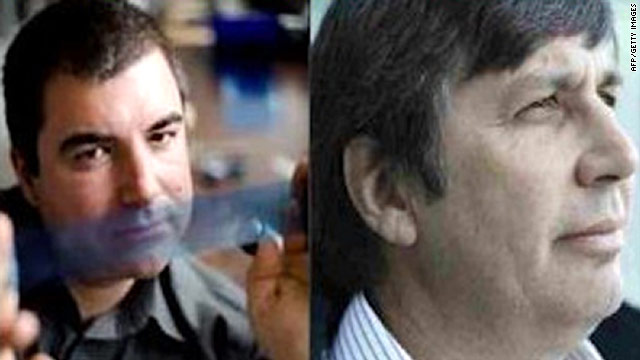
Konstantin Novoselov and Andre Geim received the Nobel prize for physics for their work with Graphene.
Feeding into the economy over a ten year period, the money has been awarded to the Graphene programme led by theoretical physicist Jari Kinaret at Chalmers University of Technology in Gothenburg, Sweden. An initial award of 54 million Euros will be made over the next 30 month in order to ramp up the current levels of research and development.


Speaking of how industry is central to the Eurpeon intiative, Professor Kinaret has commented,
“The involvement of industry can be divided into three elements. There is a management component, where three of the nine seats on our strategic advisory council are filled by the industrial sector in the form of Nokia, Airbus and Texas Instruments. Then there is a larger group of companies who are research partners and who account for at least 14 percent of the total budget; a figure which could increase to almost 30 percent after open applications have been received.
Thirdly, there is a group of companies who want to monitor development but are not persuaded that the technology is mature enough yet for them to enter the field themselves in terms of research. These include AB Volvo and Autoliv.
The whole idea is that academia and business will work better together. In Europe we are strong in research, but up to now we have been less successful in deriving financial benefit from research than our counterparts in Asia and the USA… This is commonly referred to as the European paradox. This is what our flagship is trying to address. If we succeed, the entire “European fleet” will benefit.
The most rapid breakthroughs will be seen in the field of printable and flexile electronics. The advantages in this field are huge compared with existing technology. It is estimated that the market will be worth USD 60 billion a year by 2020, of which more than half will be in flexible electronics. In the USA, graphene is already being used in packaging material which alerts when someone tries to break it open.”

The support coming from the European Commission is only one of the fronts on which the graphene industry is being financed. As commented on in earlier articles, the UK government is also pledging its support by way of a £21 million package of investment that will see several universities benfiting.

Receiving the lion’s share of the money is Cambridge University, who have today announced the construction of a £12 million specialist research centre. The Cambridge team of scientists are involved in researching graphene flexible electronics and opto-electronics, which could include things like touch-screens and other display devices.

And you wil not have to wait long for the work at  the Cambridge Graphene Centre to commence; it is planned that the centre will start its activities on February 1st 2013, with a dedicated facility due to open at the end of the year.

Professor Andrea Ferrari, who will be the Centre’s Director, said:
“We are now in the second phase of graphene research, following the award of the Nobel Prize to Geim and Novoselov. That means we are targeting applications and manufacturing processes, and broadening research to other two-dimensional materials and hybrid systems. The integration of these new materials could bring a new dimension to future technologies, creating faster, thinner, stronger, more flexible broadband devices.”
The centre will initially focus on improving the chemical vapour deposition production of graphene and will hopefully open up a wide avenue of possibility in terms of future devices and applications.
The remainder of the investment coming from the UK is to be divided amongst the other universities. Imperial College London will receive over £4.5m to investigate aerospace applications of graphene whilst the other successful projects are based at Durham University, the University of Manchester, the University of Exeter and Royal Holloway.

The universities will themselves contribute about £2m to the overall effort, and will work with industrial partners including Nokia (NYSE: NOK) , BAE Systems  (LSE: BA.L), Procter & Gamble(LSE: PG), Qinetiq(LSE: QQ), Rolls-Royce (LSE: RR.L), Dyson (LSE: DYS), Sharp (6753.T) and Philips Research (NYSE: PHG)- the pooled resources of which will add a further £12m in investment.

Clearly, the strategic response within Europe to the paradox of under commercialisation will take several years to bear fruit. Whether the response to the growth of the graphene industry has been swift enough will be decided, to some extent, by the speed with which Europe manages to claw its way back up the table of world patents. Whatever happens, Europe government, and a small clique of European companies, have nailed their colours to the mast of the graphene industry. The potential of the material is obvious, all we need to do know is make it pay.
Sources:
Cambridge University
Nature
Chalmers University
BBC